How to Pick a Ripe Pomelo: 5 Tips for Choosing the Best Fruit
Learn how to pick the perfect pomelo every time with these 5 expert tips. From the weight test to fragrance cues, never bring home a bad pomelo again.
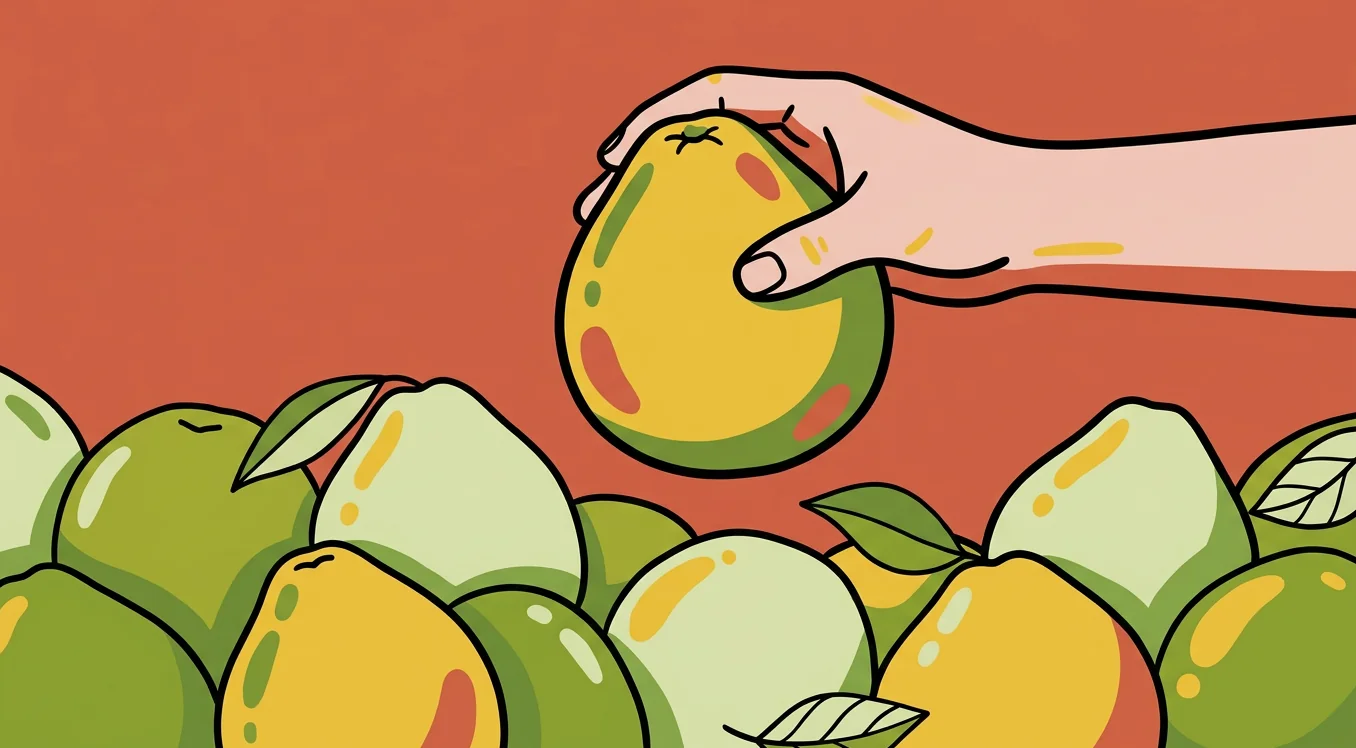
How to Pick a Ripe Pomelo: 5 Tips for Choosing the Best Fruit
Pomelos aren’t the easiest fruit to judge from the outside. That thick, spongy rind hides everything: the color of the flesh, the juiciness, the ripeness. You can’t squeeze a pomelo like a peach or sniff it like a cantaloupe and expect clear answers. And at two to four dollars per fruit, nobody wants to get home, spend five minutes peeling, and discover a dry, flavorless disappointment.
These are the five tests that work every single time.
1. The Weight Test (Most Important)
Pick it up. It should feel heavy for its size.
This is the single most reliable indicator of a good pomelo. Weight means juice. A pomelo that feels light relative to its size has dried out internally, and no amount of ripeness will compensate for lost moisture.
The technique is simple: pick up two or three pomelos of similar size and compare them in your hands. The heaviest one is almost always the best choice. Don’t compare a small pomelo to a large one. The comparison only works between fruits of roughly the same dimensions.
A heavy pomelo tells you that the flesh inside is plump and well-hydrated. A light pomelo tells you that the pith-to-flesh ratio is unfavorable, or the fruit has been sitting too long and has started to dry from the inside out.
If you only remember one tip from this article, make it this one.
2. The Skin Feel
Run your hand over the surface. You want smooth, firm skin with just a slight give.
A ripe pomelo’s skin should feel relatively smooth and taut. When you press gently with your thumb, it should give just slightly (similar to pressing the pad of your palm) and spring back.
What you’re looking for:
- Smooth texture: the fruit was harvested at proper maturity
- Slight give under pressure: the fruit is ripe and the flesh inside has developed fully
- No soft or mushy spots: soft areas usually mean bruising or internal decay
- No wrinkled or shriveled patches: a sign the fruit is dehydrated and past its prime
Avoid pomelos with excessively hard skin that doesn’t give at all. Pomelo skin is naturally firmer than most citrus, but a rock-hard rind often means the fruit was picked too early and will be sour or bland.
3. Color Cues
Look for even, consistent coloring appropriate to the variety.
Pomelo skin color varies a lot depending on the variety, so color is less universal than weight or feel. That said, some general principles apply:
- Yellow to pale green pomelos (most common in Western grocery stores): Look for even, uniform color. A pomelo transitioning from green to yellow is ripening. Fully yellow skin with a slight green tinge at the stem end is typical of peak ripeness.
- Green pomelos (Thai varieties like Thong Dee): These can stay green even when fully ripe. Rely more on weight and feel for these varieties.
- Pink-tinged skin: Some red-fleshed varieties develop a faint blush on the rind. This is a good sign. It often correlates with sweeter, more developed flesh inside.
In all cases, avoid pomelos with dark brown spots or patches, which indicate fungal damage or freeze injury. A few minor cosmetic blemishes on the surface are fine and don’t affect the interior.
4. The Fragrance Test
Bring the stem end close to your nose. A ripe pomelo has a subtle, sweet citrus fragrance.
This test is less dramatic than with melons or stone fruits, but it works. Hold the pomelo with the stem end facing you and inhale. A ripe pomelo gives off a mild, sweet, floral citrus scent, not overpowering, but noticeable.
What the fragrance tells you:
- Sweet, pleasant citrus aroma: the fruit is ripe and ready to eat
- No noticeable scent: the fruit may be underripe or was harvested early. It might still be okay, but it’s not at peak flavor
- Fermented or sour smell: the fruit is overripe or has started to decay internally. Put it back
The fragrance test works best at room temperature. If the pomelos have been refrigerated in the store, the cold suppresses volatile aromatics, making this test less reliable.
5. Shape and Symmetry
A well-formed, symmetrical pomelo is generally a better choice.
Pomelos come in a range of shapes. Round, pear-shaped, and slightly oblong are all normal depending on the variety. What you’re looking for is consistency of shape rather than a specific shape.
- Symmetrical, well-rounded fruit suggests even development and consistent growing conditions
- Lopsided or irregularly shaped fruit may have experienced uneven pollination or growth stress, which can mean uneven flesh distribution (more pith on one side, less on the other)
- Flattened areas sometimes indicate the fruit was pressed against a branch or another fruit during growth. Minor flattening is cosmetic, but significant deformation may mean thicker pith and less flesh in that area
Shape is the least important of the five tests. An ugly but heavy pomelo will almost always taste better than a perfectly round but lightweight one.
Common Mistakes to Avoid
Judging by size alone. Bigger isn’t necessarily better. A massive pomelo may be mostly pith with a relatively small flesh core. Medium-sized pomelos often have a better flesh-to-rind ratio.
Choosing the greenest fruit. Unless you are buying a variety that stays green when ripe (like some Thai pomelos), very green skin usually means the fruit is underripe. It will be more sour and less aromatic.
Ignoring the bottom of the fruit. Always check the blossom end (bottom) of the pomelo. This is where decay most commonly starts. If it feels soft, spongy, or has visible mold, skip it even if the rest of the fruit looks fine.
Assuming bruises are harmless. Pomelo’s thick rind does provide some protection, but significant bruising can penetrate to the flesh and cause bitter, off-flavored sections. Minor surface scuffs are fine; deep soft spots are not.
What to Do When Options Are Limited
Sometimes, especially at conventional grocery stores, the pomelo selection is small and none of the options look great. (Check our buying guide for where to find better selection.) In that case, prioritize in this order:
- Weight: always choose the heaviest available
- No soft spots or decay: this is non-negotiable
- Slight give in the skin: some firmness is acceptable
- Color and fragrance: nice to have, but secondary
If every pomelo in the bin feels light and dry, it’s better to wait for a fresh shipment than to buy a poor specimen. Ask the produce manager when they expect new stock. Pomelos are typically restocked weekly during peak season (November through March in the Northern Hemisphere).
The Bottom Line
Picking a great pomelo comes down to trusting your hands more than your eyes. The weight test is your most powerful tool, followed by skin texture, then color, fragrance, and shape. Master these five checks and you’ll bring home a good pomelo every time. Once you’ve got a winner, check out our storage guide to keep it fresh, or jump straight to how to eat it.
Last updated March 9, 2026