Pomelo Growing Zones: Where Can You Grow Pomelo Trees?
Find out which USDA hardiness zones support pomelo trees, how temperature affects growth, and strategies for growing pomelo in cooler climates using containers and microclimates.
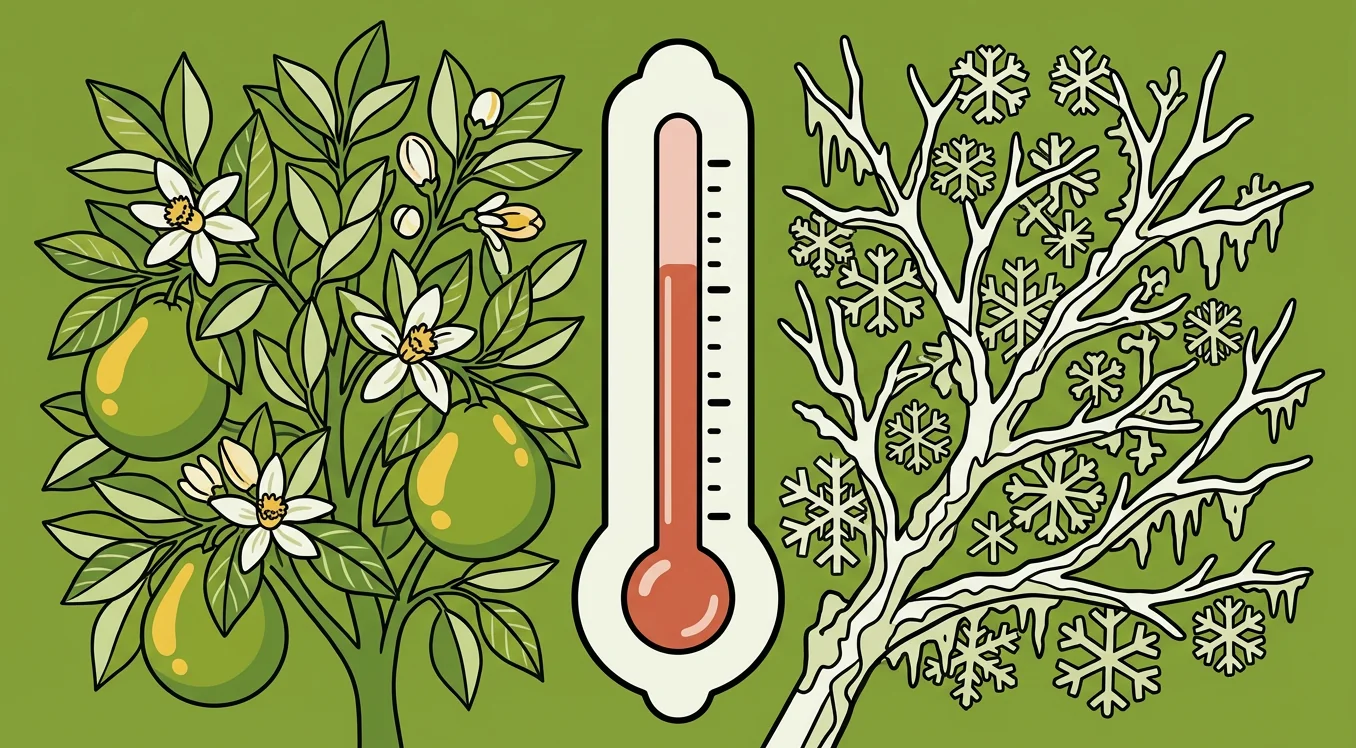
Pomelo Growing Zones: Where Can You Grow Pomelo Trees?
The pomelo (Citrus maxima) is a tropical species with real limits on where it’ll thrive outdoors. If you’re considering planting a pomelo tree, the most important question is whether your climate can support it. The answer depends on your USDA hardiness zone, your specific microclimate, and how much cold protection you’re willing to provide.
The pattern is consistent: pomelo success in the ground requires sustained warmth.
USDA Hardiness Zones for Pomelo
Pomelo trees grow reliably outdoors in USDA hardiness zones 9b through 11. Zone 9a is marginal but possible with protection. Anything colder than zone 9a requires container growing with winter indoor storage.
Zone breakdown:
| Zone | Minimum Temp Range | Pomelo Viability |
|---|---|---|
| 11 (40°F+) | No freeze risk | Excellent, ideal conditions |
| 10b (35-40°F) | Rare light frost | Excellent |
| 10a (30-35°F) | Occasional light frost | Very good |
| 9b (25-30°F) | Moderate frost risk | Good with frost protection |
| 9a (20-25°F) | Regular frost events | Marginal, requires active cold protection |
| 8b (15-20°F) | Hard freezes likely | Container only |
| 8a and below | Sustained freezes | Container only, indoors in winter |
The critical temperature thresholds for pomelo are:
- 32°F (0°C): Foliage damage begins. Young trees and new growth are particularly vulnerable.
- 28°F (-2°C): Significant leaf drop, twig damage, and potential loss of young trees. This is the practical survival limit for mature pomelo trees.
- 25°F (-4°C): Major branch dieback in mature trees. Young trees likely killed outright.
- 20°F (-7°C): Tree death likely for all but the most protected, established specimens.
These thresholds apply to duration as well as temperature — cold hardiness in citrus depends heavily on exposure length. A brief dip to 28°F for two hours is far less damaging than a sustained 28°F over an entire night. Wind chill compounds the effect. Wet freezes (freezing rain or sleet) cause more damage than dry cold at the same temperature.
Temperature and Fruit Quality
Cold tolerance is not just about tree survival — it affects fruit quality too. Pomelo trees that experience regular cold stress (even above lethal thresholds) produce less fruit, and the fruit they do produce tends to be thicker-skinned and less sweet.
The ideal temperature range for fruit development is 75-95°F (24-35°C) during the growing season. Pomelos need sustained warmth over the 5-6 month fruit development period to accumulate sugars and reach full size. This is why the best-tasting pomelos come from tropical and subtropical regions where temperatures rarely drop below 60°F, even at night.
In zone 9, the shorter warm season and cooler nights mean pomelo fruit may not reach the same sweetness as fruit grown in zones 10-11. This is a quality trade-off that zone 9 growers should be aware of — the tree may survive, but the fruit may be less impressive than what you find at the grocery store (which was likely grown in Southeast Asia or Southern California).
Regional Suitability in the United States
California
California offers some of the best pomelo-growing conditions in the continental United States, but only in specific areas.
Best areas: The inland valleys of Southern California (Riverside, San Bernardino, and eastern Los Angeles counties), the San Joaquin Valley, and the low desert regions (Coachella Valley, Imperial Valley). These zones 9b-10b areas provide the long, hot growing seasons and mild winters that pomelo demands. The Chandler pomelo was developed specifically for California conditions.
Marginal areas: Coastal Southern California (zones 10a-10b) has adequate winter temperatures but cooler summers due to marine influence. Pomelos grow here but fruit may be less sweet. The San Francisco Bay Area (zone 9b-10a) is marginal — trees survive but fruit quality is inconsistent.
Not suitable outdoors: Northern California interior valleys get too cold in winter (zone 8-9a), and the coastal North Coast regions lack sufficient summer heat.
Florida
Florida’s subtropical climate is broadly suitable for pomelo, but with a significant caveat: freeze risk increases sharply as you move north of Lake Okeechobee.
Best areas: South Florida (Miami-Dade, Broward, Palm Beach counties) offers zone 10b-11a conditions that approximate the pomelo’s native Southeast Asian climate. Humidity is high, freezes are extremely rare, and the long warm season supports excellent fruit development.
Good areas: Central Florida (zone 9b-10a), including the traditional citrus belt around Polk, Highlands, and Indian River counties. Pomelos perform well here but require frost protection during cold snaps, which occur several times per decade.
Marginal areas: North-central Florida (zone 9a) experiences more frequent freezes. Pomelo is riskier here than in the central belt, and many growers prefer more cold-tolerant citrus like satsuma mandarins.
Not suitable: North Florida (zone 8b and below) has regular hard freezes that make outdoor pomelo growing impractical.
One Florida-specific concern: Citrus greening disease (Huanglongbing/HLB) is present throughout the state and affects all citrus, including pomelo. There is currently no cure, and the Asian citrus psyllid vector is widespread. Florida pomelo growers should monitor for symptoms and follow the latest extension recommendations for psyllid management.
Texas
Texas pomelo growing is essentially limited to the Rio Grande Valley in the state’s southernmost tip.
Best area: The Lower Rio Grande Valley (Hidalgo, Cameron, and Willacy counties) sits in zone 9b-10a and has a long history of commercial citrus production. Pomelos grow well here, though they are less commonly planted than grapefruit and oranges.
Marginal areas: The Houston/Gulf Coast region (zone 9a-9b) can support pomelo with protection, but periodic hard freezes (like the February 2021 event that devastated Texas citrus) pose a real risk.
Not suitable: The rest of Texas is too cold, too dry, or both. The arid West Texas climate lacks the humidity pomelos prefer, and Central and North Texas experience winter temperatures well below pomelo tolerance.
Hawaii
Hawaii (zones 10b-12) provides near-ideal conditions for pomelo. The warm, humid climate with no frost risk mirrors the fruit’s native Southeast Asian habitat. Pomelo trees grow vigorously across the islands and produce excellent fruit, particularly at lower elevations. The Hawaiian name for pomelo is jabong.
Microclimates: Pushing the Zone Boundaries
Microclimate management is how many growers in marginal zones (9a-9b) succeed with pomelo. A microclimate is a localized area where conditions differ from the surrounding zone — warmer in winter, more sheltered, or more humid.
Strategies for creating a favorable microclimate:
- South-facing walls: Planting against a south-facing masonry or stone wall provides reflected heat during the day and radiated warmth at night. Studies have documented temperature differences of 5-10°F between a wall-adjacent planting and an open-field location on the same property.
- Slope positioning: Cold air sinks. Planting on the upper portion of a slope rather than at the bottom avoids cold air pooling, which can mean the difference between 30°F and 25°F on a still, clear night.
- Windbreaks: A fence, hedge, or building that blocks prevailing winter winds reduces wind chill and convective heat loss from the tree canopy.
- Urban heat island: Trees planted in urban or suburban settings benefit from radiated heat from buildings, pavement, and nearby structures. A pomelo in a sheltered backyard in a city often fares better than one in an exposed rural setting in the same USDA zone.
- Proximity to water: Large bodies of water moderate temperature extremes. Lakefront and coastal properties may be a half-zone warmer in winter than inland locations at the same latitude.
These microclimate factors can effectively shift your conditions by one-half to one full USDA zone, potentially bringing a zone 9a property into viable pomelo range.
Container Growing in Cooler Zones
For growers in zone 8 and below, container culture is the path to pomelo ownership. It’s more labor-intensive than in-ground growing, but it works. Productive container pomelos grow as far north as the Pacific Northwest and the mid-Atlantic states.
Key principles:
- Use a dwarf variety on dwarfing rootstock. Dwarf Chandler is the most widely available and performs well in containers. Full-size pomelo trees are impractical in pots.
- Start with a 15-gallon container and plan to eventually size up to 20-25 gallons. Ensure ample drainage holes.
- Use a well-draining citrus potting mix. Never use garden soil, which compacts and drowns roots in containers.
- Move outdoors for summer once nighttime temperatures consistently exceed 55°F. Acclimate gradually over a week to avoid sunburn on leaves.
- Move indoors before the first frost. Place near the brightest window available — south-facing is ideal. Supplement with full-spectrum grow lights if natural light is insufficient (less than 6 hours of direct sun).
- Expect reduced yields. Container pomelos produce 10-30 fruits per year under good conditions, compared to 50-150 for a mature in-ground tree.
For comprehensive container growing guidance, see the indoor growing section of our pomelo tree care guide.
International Growing Regions
Globally, the pomelo’s growing range follows the tropics and subtropics:
- Southeast Asia (zones 11-12): China, Thailand, Vietnam, Indonesia, Malaysia, and the Philippines are the world’s major producers, China alone dominates global production, with Fujian, Guangdong, and Guangxi provinces growing pomelo at massive commercial scale.
- South Asia (zones 10-11): India and Bangladesh grow pomelo, particularly in the northeast and southern regions.
- Mediterranean (zones 9b-10a): Limited pomelo cultivation in southern Spain, Sicily, and Israel, where the climate is warm enough but drier than ideal. Irrigation compensates for low rainfall.
- Caribbean and Central America (zones 10-12): Pomelo (often called shaddock) grows well throughout the region, particularly in Jamaica, Trinidad, and Costa Rica.
- Australia (zones 9b-11): Queensland and northern New South Wales support pomelo growing. The fruit is gaining popularity in Australian markets.
- Southern Africa (zones 9b-10b): South Africa grows pomelo on a small commercial scale, primarily in Limpopo and Mpumalanga provinces.
The common thread is that pomelo requires a frost-free or nearly frost-free growing season of at least 8-9 months to produce quality fruit. Any region that provides this, with adequate rainfall or irrigation, can support the tree.
Making Your Decision
If you are evaluating whether to plant a pomelo tree, start with these three questions:
-
What is your USDA zone? If you are in zone 9b or warmer, you have a realistic shot at in-ground growing. If zone 9a, it is possible with microclimate management and active frost protection. Zone 8 and below means containers.
-
What is your microclimate? A sheltered south-facing spot in zone 9a may effectively perform like zone 9b. An exposed, wind-swept site in zone 10a may perform worse than expected. Assess your specific site, not just your zone on the map.
-
How much effort are you willing to invest? Container growing in a cold climate is a real commitment — you are moving a heavy pot in and out seasonally and providing supplemental light indoors. If that sounds burdensome, consider a more cold-hardy citrus like satsuma mandarin (zone 8b+) or kumquat (zone 8a+).
For those who do move forward, whether in the ground in zone 10 or in a pot in zone 7, the pomelo tree care guide covers soil preparation through harvest. And if you’re starting from scratch, our guide on growing pomelo from seed walks through germination step by step.
Last updated March 9, 2026