Pomelo and Drug Interactions: What Medications Are Affected?
Learn which medications interact with pomelo, how furanocoumarins inhibit CYP3A4 enzyme activity, and what precautions to take. Expert guide with safe alternatives.
Pomelo and Drug Interactions: What Medications Are Affected?
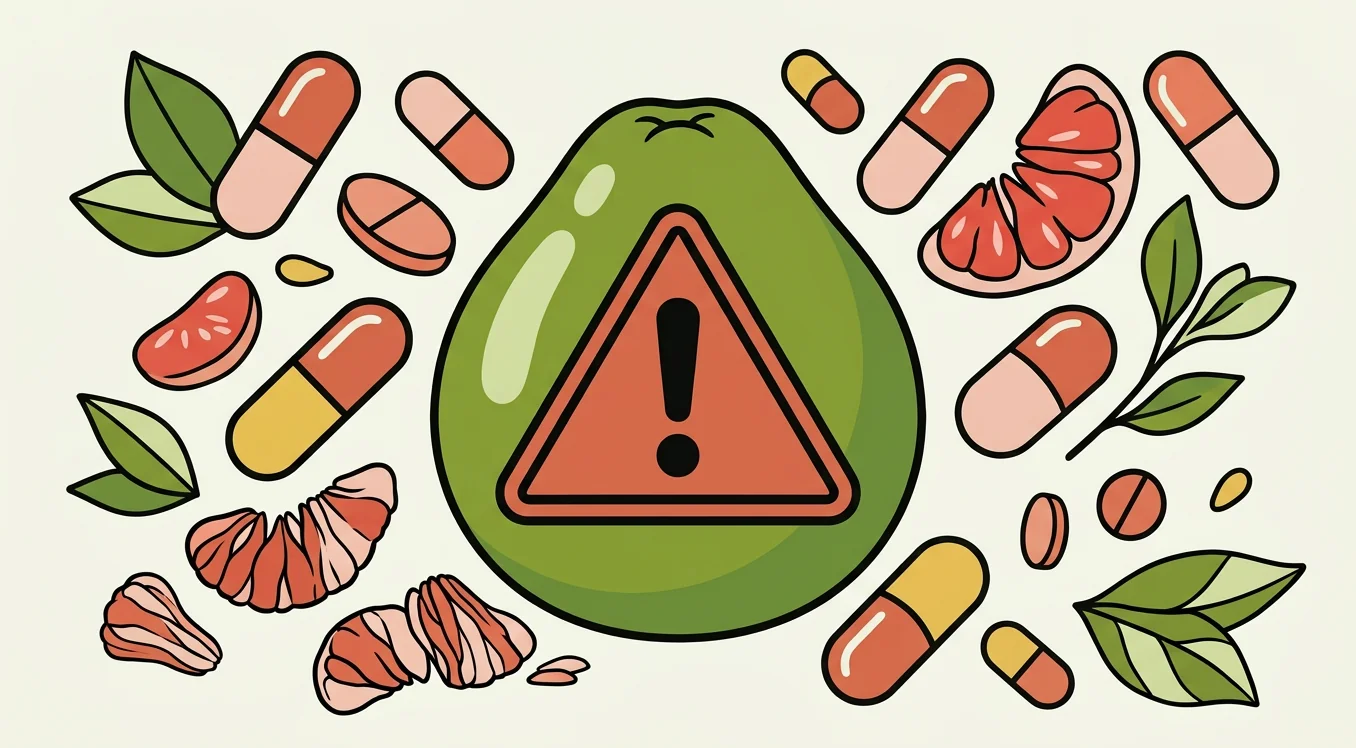
If you take prescription medication, that pomelo on your counter could be more than a snack. It could be a serious safety concern. Like its close relative grapefruit, pomelo contains compounds that interfere with how your body metabolizes dozens of common drugs, potentially turning a normal dose into a dangerous one.
Why Pomelo Interacts with Medications
The culprits are a class of organic chemical compounds called furanocoumarins, particularly 6’,7’-dihydroxybergamottin (DHB) and bergamottin. These naturally occurring substances are found in the flesh, juice, and peel of pomelo and several other citrus fruits, and the full scope of these grapefruit-drug interactions is well documented.
Here’s how the interaction works:
Your body relies on a family of enzymes called cytochrome P450 to break down medications in the small intestine and liver. One of the most important of these enzymes is CYP3A4, which is responsible for metabolizing an estimated 50% of all drugs on the market. The effect of grapefruit juice on drug disposition (and by extension pomelo) is well established.
When you consume pomelo, the furanocoumarins irreversibly bind to CYP3A4 enzymes in the lining of your small intestine, effectively destroying them. With fewer active enzymes available, your body cannot break down certain medications at the normal rate. The result: significantly more of the drug enters your bloodstream than intended.
This isn’t a subtle effect. Grapefruit-type interactions can increase drug bioavailability by 200% to over 1,500% in some cases. A single standard dose could behave as if you’d taken two to fifteen times the prescribed amount.
How Long Does the Interaction Last?
This is where many people underestimate the risk. Because furanocoumarins permanently deactivate CYP3A4 enzymes rather than simply blocking them temporarily, the interaction does not end when the pomelo is digested. Your body must synthesize entirely new enzymes to restore normal drug metabolism.
This process takes roughly 48 to 72 hours. A single glass of pomelo juice in the morning can affect medications you take up to three days later. Spacing out your pomelo and medication within the same day offers no meaningful protection.
Which Medications Are Affected?
The list of drugs that interact with pomelo and grapefruit is extensive and continues to grow as researchers identify new interactions. Below are the major medication classes of concern.
Statins (Cholesterol-Lowering Drugs)
Statins are among the most widely prescribed drugs affected by pomelo interactions. CYP3A4 inhibition can dramatically increase statin blood levels, raising the risk of severe muscle damage (rhabdomyolysis) and liver injury.
- High risk: Simvastatin (Zocor), lovastatin (Mevacor), atorvastatin (Lipitor)
- Lower risk: Pravastatin (Pravachol), rosuvastatin (Crestor), fluvastatin (Lescol). These are metabolized through different pathways and are generally considered safe with citrus.
Calcium Channel Blockers (Blood Pressure Medications)
These widely prescribed antihypertensives can reach dangerously elevated blood levels when combined with pomelo, leading to excessive drops in blood pressure, dizziness, and rapid heartbeat.
- Affected drugs: Felodipine (Plendil), nifedipine (Procardia), amlodipine (Norvasc), verapamil (Calan)
Immunosuppressants
For organ transplant recipients and patients with autoimmune conditions, this interaction can be life-threatening. Elevated levels of immunosuppressants increase the risk of toxicity, while inconsistent citrus intake can cause unpredictable drug levels.
- Affected drugs: Cyclosporine (Sandimmune, Neoral), tacrolimus (Prograf), sirolimus (Rapamune)
Anti-Anxiety Medications and Sedatives
Benzodiazepines and related drugs metabolized by CYP3A4 can produce excessive sedation, impaired coordination, and respiratory depression when combined with pomelo.
- Affected drugs: Buspirone (BuSpar), triazolam (Halcion), midazolam (Versed), diazepam (Valium)
Antihistamines
Certain antihistamines can accumulate to dangerous levels, potentially causing heart rhythm abnormalities.
- Affected drugs: Terfenadine (withdrawn from many markets for this reason), fexofenadine (Allegra). Note that fexofenadine’s interaction is different: pomelo may decrease its absorption via OATP inhibition.
Blood Thinners and Anticoagulants
Elevated blood thinner levels increase the risk of serious bleeding events.
- Affected drugs: Warfarin (Coumadin), apixaban (Eliquis), rivaroxaban (Xarelto), clopidogrel (Plavix). Clopidogrel’s interaction is more complex since it’s a prodrug.
Other Affected Drug Classes
The interaction extends to many other medications, including:
- Anti-arrhythmics: Amiodarone (Cordarone), dronedarone (Multaq)
- Erectile dysfunction drugs: Sildenafil (Viagra), tadalafil (Cialis)
- Certain antibiotics: Erythromycin, clarithromycin
- Certain cancer drugs: Various tyrosine kinase inhibitors and chemotherapy agents
- Opioid pain medications: Oxycodone, fentanyl, methadone
Pomelo vs. Grapefruit: Is the Interaction the Same?
Pomelo (Citrus maxima) is the ancestor of grapefruit, which is a natural hybrid of pomelo and sweet orange. Both fruits contain the same problematic furanocoumarins, and clinical evidence confirms that pomelo produces comparable CYP3A4 inhibition to grapefruit.
Researchers who directly measured furanocoumarin content in pomelo juice found concentrations sufficient to produce clinically significant enzyme inhibition. In some pomelo varieties, furanocoumarin levels were equal to or higher than those in grapefruit.
The key point: if your medication label warns against grapefruit, the same warning applies to pomelo. This also extends to tangelos, Seville (sour) oranges, and other pomelo-grapefruit hybrids.
Common citrus fruits that are generally safe include regular sweet oranges, mandarins, tangerines, clementines, lemons, and limes. These contain negligible amounts of the problematic furanocoumarins.
Safe Alternatives If You Take Affected Medications
If you enjoy citrus but take medications on the affected list, you have several options:
- Sweet oranges. Navel, Valencia, and blood oranges don’t contain significant furanocoumarins.
- Mandarins, tangerines, and clementines. Safe for virtually all medications.
- Lemons and limes. No clinically significant CYP3A4 interactions.
- Ask about alternative medications. For statins, your doctor may be able to switch you to pravastatin or rosuvastatin, which aren’t affected.
When to Talk to Your Doctor or Pharmacist
You should consult your healthcare provider about pomelo interactions if:
- You take any prescription medication regularly
- You are starting a new medication and currently eat pomelo or grapefruit
- You want to add pomelo to your diet and are unsure whether your medications are affected
- You have experienced unexpected side effects and recently consumed pomelo or grapefruit
Pharmacists are an excellent resource for checking drug-food interactions and can review your full medication list for potential concerns. Many will do this as a free consultation.
Do not stop taking prescribed medication based on this article. If you discover a potential interaction, keep taking your medication as prescribed and contact your healthcare provider. The risk of stopping a necessary medication is almost always greater than the risk from an occasional citrus interaction. The FDA’s consumer guidance on grapefruit juice interactions applies equally to pomelo.
The Bottom Line
Pomelo is a nutritious fruit, but its furanocoumarins can cause serious interactions with dozens of common medications by irreversibly inhibiting CYP3A4 enzymes. The effect can last up to 72 hours after a single serving, and there’s no safe window for timing pomelo around affected medications within the same day. The list of affected drugs continues to grow.
If you take prescription drugs, especially statins, blood pressure medications, immunosuppressants, or sedatives, check with your pharmacist before eating pomelo. If you’re not on affected medications, pomelo remains a great addition to a healthy diet.
Last updated March 9, 2026