Mango Pomelo Sago: Classic Hong Kong Dessert Recipe
Learn how to make authentic mango pomelo sago (yang zhi gan lu), the beloved Hong Kong chilled dessert with ripe mango, pomelo segments, and tapioca pearls.
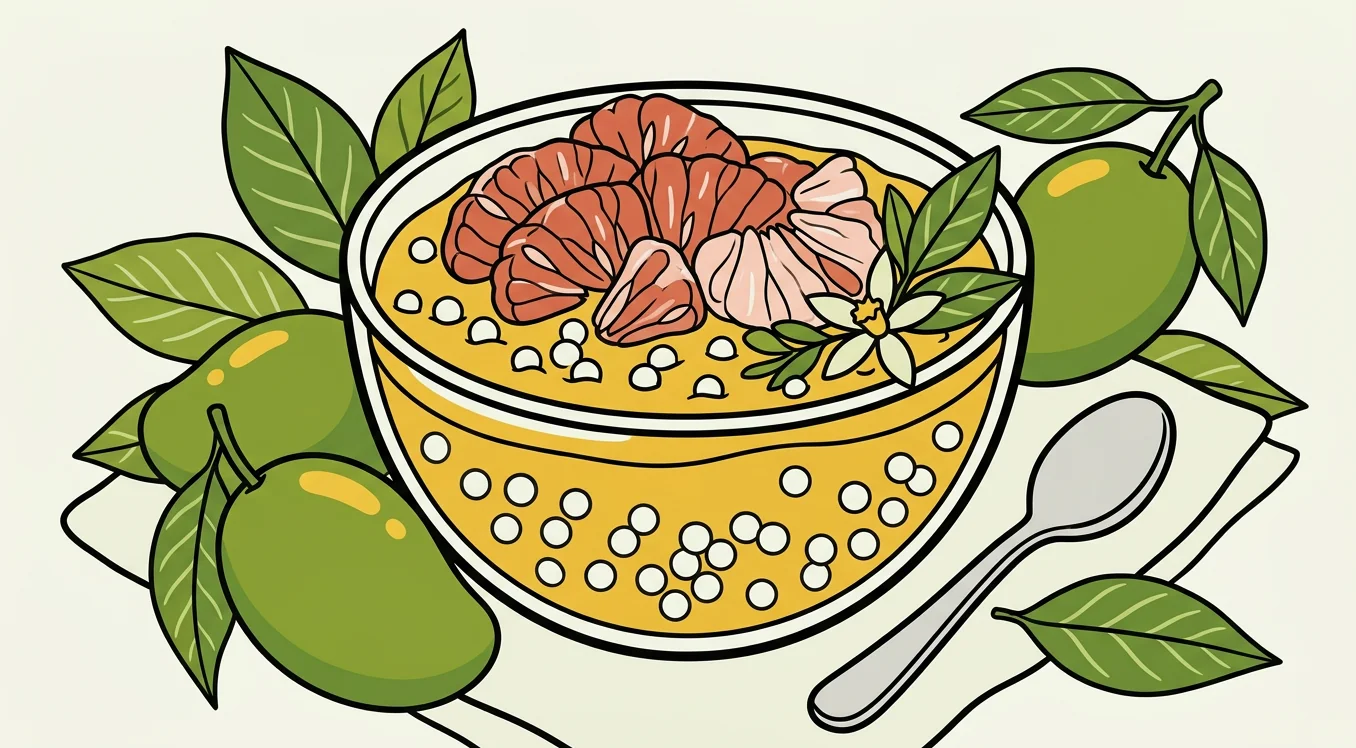
Mango pomelo sago, known in Cantonese as yang zhi gan lu (杨枝甘露), meaning “sweet dew of the willow branch,” is one of Hong Kong’s most iconic desserts. Creamy mango puree meets the pop of tapioca pearls and the bright, juicy burst of fresh pomelo in a chilled bowl that balances richness with citrus freshness.
What Is Mango Pomelo Sago?
Mango pomelo sago was created at the legendary Lei Garden restaurant in Hong Kong during the 1980s. It quickly became a staple of Cantonese dessert culture, spreading to dim sum houses, dessert cafes, and home kitchens across Southeast Asia and beyond.
The dessert belongs to a family of Cantonese tong sui (sweet soups), chilled or warm liquid desserts served after a meal. What sets mango pomelo sago apart is the interplay of three textures: silky mango puree, chewy sago pearls, and the juicy, slightly bitter pop of pomelo segments. The coconut milk ties everything together with a gentle creaminess.
It’s now one of the most popular Chinese desserts worldwide, and for good reason. It’s simple to make, endlessly refreshing, and looks great on the table.
Ingredients
For the sago:
- 1/2 cup small sago (tapioca) pearls
- 6 cups water for boiling
For the mango base:
- 2 large ripe Ataulfo (champagne) mangoes
- 1 cup coconut milk
- 1/2 cup evaporated milk
- 3 tablespoons sugar, adjusted to taste
- 1/2 cup cold water
For assembly:
- 1 cup pomelo segments, membranes removed and flesh separated into small pieces
- Reserved diced mango for topping
Ataulfo mangoes are the best choice here. They’re fiber-free, deeply sweet, and puree into a smooth, almost custard-like texture. Tommy Atkins or Kent mangoes will work in a pinch, but the dessert won’t be quite as silky.
For the pomelo, any variety works well. A honey pomelo adds sweetness, while a white pomelo offers a pleasant bitter contrast. You’ll need to peel and segment the pomelo ahead of time, removing all the thick membrane from each segment.
Step-by-Step Instructions
Cook the Sago
- Bring 6 cups of water to a rolling boil in a medium saucepan.
- Add the sago pearls and stir immediately to prevent sticking.
- Cook on medium heat for 10 to 12 minutes, stirring occasionally. The pearls will turn from white to mostly translucent with a tiny white dot in the center.
- Remove from heat, cover, and let stand for 5 minutes. The residual heat will finish cooking the pearls until they are fully translucent.
- Drain the sago in a fine-mesh strainer and rinse under cold running water to stop cooking and remove excess starch. Set aside.
The key to perfect sago is patience. Do not rush this step. Starch granules need sufficient time and heat to fully hydrate and gelatinize. Undercooked sago is gritty and chalky; overcooked sago turns into a gummy mass. You want each pearl to be translucent throughout with a tender, bouncy chew.
Prepare the Mango Puree
- Peel the mangoes and cut the flesh away from the pit.
- Set aside about 1/3 cup of diced mango for the topping.
- Place the remaining mango flesh in a blender with the coconut milk, evaporated milk, sugar, and cold water.
- Blend until completely smooth, about 30 seconds.
- Taste and adjust sweetness. If your mangoes are very ripe and sweet, you may need less sugar. If they are slightly tart, add another tablespoon.
- Refrigerate the mango base until well chilled, at least 1 hour.
Segment the Pomelo
- Separate the pomelo segments and carefully peel the thick membrane from each one.
- Break or gently pull the flesh into bite-sized pieces. You want irregular, natural-looking chunks, not a fine mince.
- Refrigerate until ready to assemble.
For a detailed guide on opening and segmenting a pomelo, see how to eat a pomelo.
Assemble the Dessert
- Divide the cooked sago among four serving bowls or glasses.
- Pour the chilled mango base over the sago.
- Top each serving with pomelo pieces and reserved diced mango.
- Stir gently before eating so the sago, mango, and pomelo are distributed throughout.
Chill and Serve
Mango pomelo sago is best served cold. If you’re making it ahead, keep the components separate and assemble just before serving. The sago absorbs liquid and gets soft if it sits in the mango base too long.
For an extra-cold dessert, serve the bowls over a bed of crushed ice or place the serving glasses in the freezer for 10 minutes before assembling.
Tips for the Best Mango Pomelo Sago
Choose the ripest mangoes you can find. This dessert lives or dies on mango quality. The fruit should be fragrant, yield slightly to pressure, and have deep golden flesh. Underripe mangoes produce a flat, acidic dessert.
Do not overcook the sago. Pull it off the heat while the pearls still have a tiny white dot in the center. The carryover cooking during the covered rest will finish the job. If you cook them until fully clear on the stove, they will be mushy by the time you serve.
Adjust the consistency. If the mango base feels too thick, thin it with a splash of cold water or extra coconut milk. If too thin, blend in more mango. The ideal consistency is like a thin smoothie, pourable but not watery.
Make it ahead wisely. You can prepare the mango base and cook the sago up to one day ahead. Store them separately in the refrigerator. The sago may clump. Just stir in a little cold water to loosen before assembling.
Variations
Coconut cream version: Replace the evaporated milk with an equal amount of coconut cream for a richer, dairy-free dessert. This is closer to some traditional Hong Kong versions and makes the dessert vegan.
Grapefruit substitute: If you cannot find pomelo, ruby red grapefruit is the closest substitute. It is more tart and less sweet than pomelo, so you may want to increase the sugar slightly.
Warm serving: While most people know mango pomelo sago as a chilled dessert, some Hong Kong dessert shops serve a warm version in cooler months. Simply warm the mango base gently (do not boil) and serve over room-temperature sago.
With condensed milk: For a sweeter, more indulgent version, replace the sugar with 2 to 3 tablespoons of sweetened condensed milk. This adds both sweetness and extra creaminess.
Nutrition Information
Per serving (approximately 1 cup):
| Nutrient | Amount |
|---|---|
| Calories | 280 |
| Total Fat | 12 g |
| Saturated Fat | 10 g |
| Carbohydrates | 44 g |
| Fiber | 2 g |
| Sugar | 30 g |
| Protein | 3 g |
Nutritional values are approximate, based on USDA FoodData Central data for raw mango and pomelo, and will vary based on mango ripeness, the amount of sugar added, and whether you use coconut milk or evaporated milk.
FAQ
Can I use canned mango? You can, but the result will not be as vibrant or flavorful. If fresh ripe mangoes are not available, frozen mango chunks (thawed) are a better option than canned. Drain any excess liquid before blending.
What is sago made of? Sago pearls are made from starch extracted from the pith of tropical sago palm trees. They are similar to tapioca pearls, which come from cassava root. For this recipe, you can use either sago or small tapioca pearls interchangeably.
How long does mango pomelo sago keep? Assembled, it keeps in the refrigerator for up to 2 days, though the texture is best within the first few hours. The sago will gradually absorb the mango liquid and soften. For longer storage, keep components separate.
Can I substitute grapefruit for pomelo? Yes. Ruby red grapefruit is the most common substitute. The flavor will be slightly more tart and bitter than pomelo, but it works well in this dessert. Adjust sweetness to compensate.
Looking for more ways to enjoy this fruit? Explore our complete pomelo recipes collection for dishes ranging from Thai pomelo salad to candied pomelo peel.
Last updated March 9, 2026