Pomelo Nutrition Facts: Complete Guide to Vitamins, Minerals, and Health Benefits
Full pomelo nutrition breakdown with USDA data per cup and per 100g. Covers vitamin C, potassium, fiber, antioxidants, calorie comparisons, and drug interaction warnings.
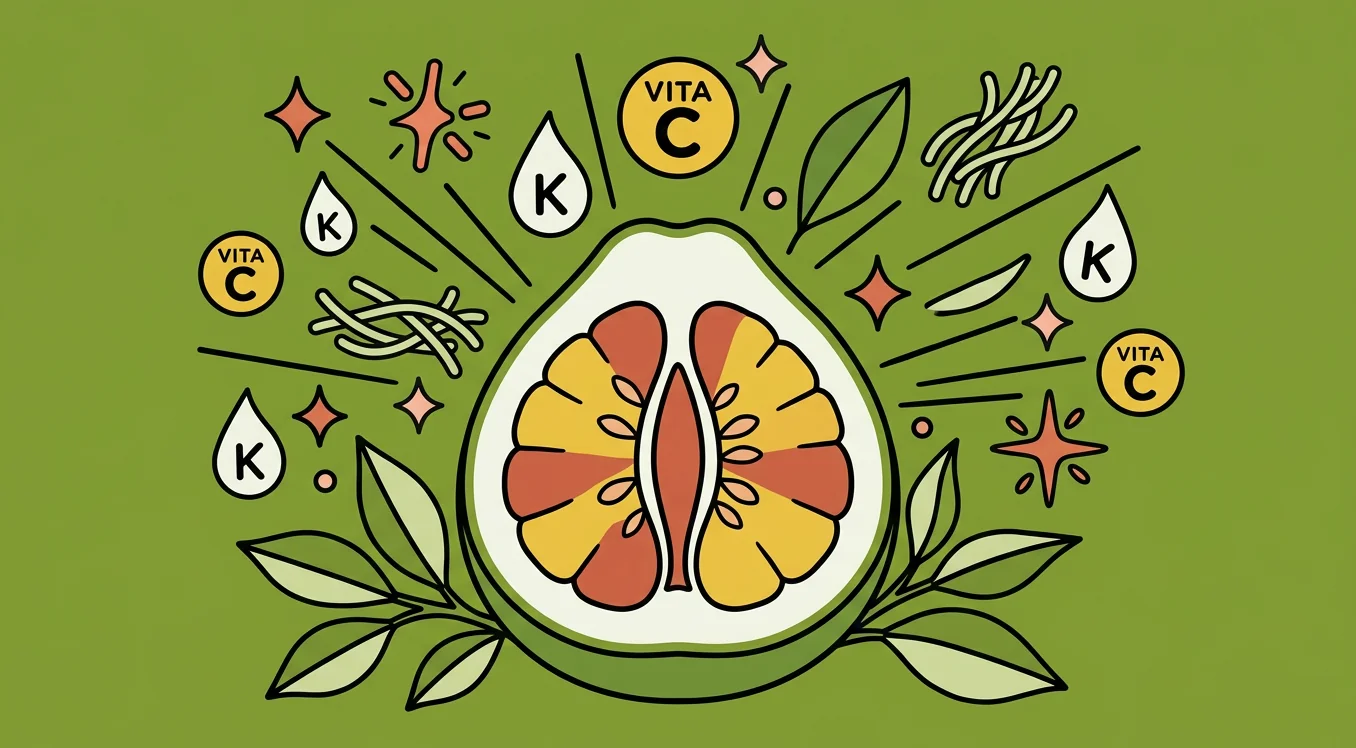



Pomelo Nutrition at a Glance
The following values are based on USDA data for raw pummelo (Citrus maxima).
Per 1 Cup of Sections (190 g)
| Nutrient | Amount | % Daily Value |
|---|---|---|
| Calories | 72 kcal | 4% |
| Total Fat | 0.08 g | <1% |
| Sodium | 2 mg | <1% |
| Total Carbohydrates | 18.3 g | 7% |
| Dietary Fiber | 1.9 g | 7% |
| Total Sugars | 16.4 g | — |
| Protein | 1.4 g | 3% |
| Vitamin C | 116 mg | 129% |
| Potassium | 410 mg | 9% |
| Thiamin (B1) | 0.065 mg | 5% |
| Riboflavin (B2) | 0.051 mg | 4% |
| Niacin (B3) | 0.42 mg | 3% |
| Vitamin B6 | 0.06 mg | 4% |
| Phosphorus | 32 mg | 3% |
| Magnesium | 11 mg | 3% |
| Copper | 0.05 mg | 6% |
| Zinc | 0.17 mg | 2% |
Per 100 g of Raw Flesh
| Nutrient | Amount | % Daily Value |
|---|---|---|
| Calories | 38 kcal | 2% |
| Total Fat | 0.04 g | <1% |
| Total Carbohydrates | 9.62 g | 3% |
| Dietary Fiber | 1.0 g | 4% |
| Total Sugars | 8.62 g | — |
| Protein | 0.76 g | 2% |
| Vitamin C | 61 mg | 68% |
| Potassium | 216 mg | 5% |
A single cup of pomelo sections delivers 129% of your daily vitamin C while adding only 72 calories. That’s one of the best micronutrient-to-calorie ratios of any common fruit.
For a detailed look at pomelo’s calorie content and how it fits into weight management, see our pomelo calories breakdown.
Key Nutrients in Detail
Vitamin C
Pomelo’s vitamin C content is its standout feature. At 61 mg per 100 grams of raw flesh, pomelo provides nearly double the vitamin C of pink grapefruit (31 mg per 100 g) and slightly more than navel oranges (59 mg per 100 g) gram for gram.
One cup of pomelo sections delivers 116 mg of vitamin C. The recommended dietary allowance (RDA) for adults is 90 mg for men and 75 mg for women, so a single serving covers the daily requirement for everyone.
Vitamin C supports collagen synthesis for skin and wound healing, immune cell production, antioxidant protection against free radicals, iron absorption from plant foods, and neurotransmitter synthesis. Since it’s water-soluble and your body can’t store it, you need it daily. Pomelo is a low-calorie way to get there.
Potassium
A cup of pomelo sections provides 410 mg of potassium, roughly 9% of the daily value. Potassium helps regulate blood pressure, muscle contraction, nerve signaling, and fluid balance.
Most Americans fall short of the adequate intake for potassium (2,600 mg/day for women, 3,400 mg for men). Pomelo helps close that gap without adding many calories or sodium. Potassium works in opposition to sodium, helping the kidneys flush excess sodium, which can lower blood pressure.
Dietary Fiber
Pomelo provides 1.9 grams of dietary fiber per cup, primarily in the form of pectin, a soluble fiber found throughout the citrus family. While this is not as much fiber as you get from berries or whole grains, it contributes to the overall fiber intake that most adults need to increase.
Pectin has specific health benefits beyond general fiber:
- Cholesterol reduction: Soluble fiber binds bile acids in the digestive tract, forcing the liver to use cholesterol to make new bile acids, which effectively lowers blood LDL cholesterol
- Blood sugar regulation: Slows gastric emptying and glucose absorption, contributing to pomelo’s low glycemic index of approximately 25 to 30
- Gut health: Fermented by beneficial gut bacteria into short-chain fatty acids that nourish colon cells
If you eat the pith (the white spongy layer between the rind and flesh), your fiber intake increases substantially. Some traditional Asian preparations intentionally include pith for this reason.
Antioxidants and Bioactive Compounds
Beyond standard vitamins and minerals, pomelo contains several bioactive compounds worth knowing about.
Naringin, the dominant flavonoid, has anti-inflammatory and lipid-lowering properties. Its metabolite naringenin shows antioxidant and anti-cancer activity in lab studies. Lycopene, found in pink and red-fleshed varieties, is associated with reduced risk of certain cancers and cardiovascular disease. Limonoids (limonin, nomilin) have shown anti-cancer activity in preclinical research.
For a full review of what these compounds mean for your health, read our guide to pomelo health benefits.
Calorie Comparison: Pomelo vs Other Citrus
Pomelo’s low calorie density is a real practical advantage. Here’s how it stacks up against other popular citrus fruits per 100 grams of raw edible flesh:
| Fruit | Calories | Vitamin C (mg) | Potassium (mg) | Fiber (g) |
|---|---|---|---|---|
| Pomelo | 38 | 61 | 216 | 1.0 |
| Grapefruit (pink) | 42 | 31 | 135 | 1.6 |
| Orange (navel) | 49 | 59 | 166 | 2.2 |
| Tangerine | 53 | 27 | 166 | 1.8 |
| Lemon (raw) | 29 | 53 | 138 | 2.8 |
| Lime (raw) | 30 | 29 | 102 | 2.8 |
The takeaway: pomelo has the fewest calories among commonly eaten citrus (lemons and limes are lower but rarely eaten whole), leads in vitamin C per 100 grams, and leads in potassium by a wide margin. Its one weakness is fiber, which is lower than other citrus, though the high water content (89%) and low glycemic index help make up for it.
For a deeper dive into pomelo’s calorie profile and weight management, see our pomelo calories guide.
Health Benefits Overview
The nutrients and bioactive compounds in pomelo contribute to several evidence-based health benefits. Here’s a summary. For the full analysis, visit our dedicated pomelo health benefits guide.
Immune support. The exceptional vitamin C content supports immune cell function and antioxidant defense. Regular vitamin C intake is associated with shorter duration and reduced severity of common colds.
Heart health. Potassium supports healthy blood pressure, while naringin and pectin fiber may help reduce LDL cholesterol. Epidemiological data links citrus consumption with lower cardiovascular disease risk.
Skin health. Vitamin C drives collagen synthesis, while flavonoid antioxidants may protect skin from UV-induced damage.
Anti-inflammatory effects. Naringin, naringenin, and limonoids demonstrate anti-inflammatory properties in laboratory research.
Digestive health. Water content, pectin fiber, and low glycemic index support healthy digestion and stable blood sugar.
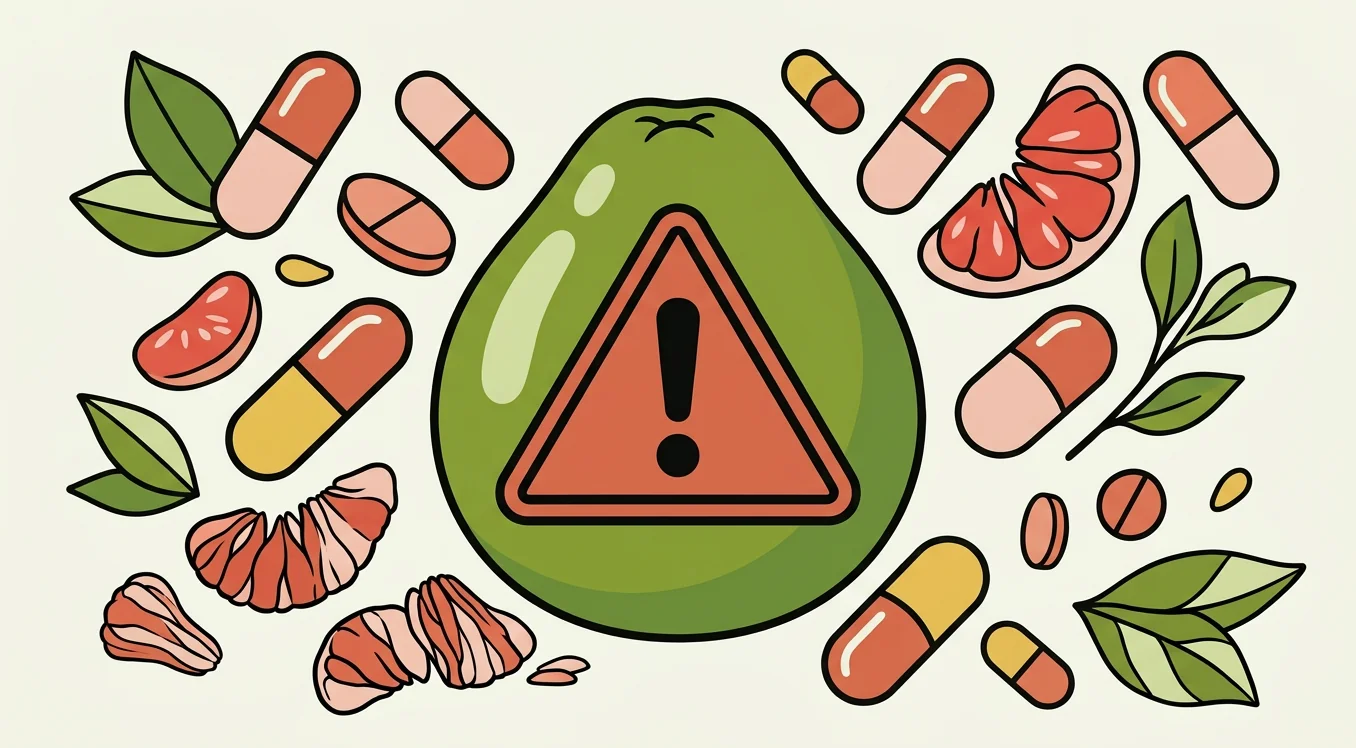
Drug Interaction Warning
This is the most important safety consideration for pomelo, and it’s worth taking seriously.
Pomelo, like grapefruit, contains furanocoumarins, compounds that inhibit the enzyme CYP3A4 in the small intestine and liver. CYP3A4 breaks down a wide range of prescription medications. When furanocoumarins block this enzyme, drugs that would normally be partially broken down during absorption enter the bloodstream at higher concentrations than intended.
Medications commonly affected include:
- Statins (simvastatin, atorvastatin, lovastatin), risk of muscle damage (rhabdomyolysis)
- Calcium channel blockers (felodipine, nifedipine, amlodipine), excessive blood pressure drop
- Immunosuppressants (cyclosporine, tacrolimus), increased toxicity risk
- Anti-anxiety medications (buspirone, certain benzodiazepines), enhanced sedation
- Antihistamines (fexofenadine), altered drug levels
- Some anticoagulants (warfarin), potential changes in blood clotting
The effect of a single pomelo serving on CYP3A4 can last 24 to 72 hours. You can’t avoid the interaction by spacing out the fruit and medication.
The rule is simple: if your medication label warns against grapefruit, avoid pomelo too. This includes pomelo hybrids such as Oro Blanco and Cocktail grapefruit. Ask your pharmacist if you’re unsure whether your specific medication is affected. For a full breakdown, see our pomelo drug interactions guide.
This isn’t a minor concern. Documented clinical cases include kidney failure, muscle breakdown, and cardiac arrhythmias from grapefruit-drug interactions. Pomelo carries the same risks.
Recommended Intake
There’s no official guideline specific to pomelo, but one to two cups of sections per day (72 to 144 calories, 129 to 258% daily vitamin C) is reasonable for most healthy adults. This fits within the recommended 1.5 to 2 cups of fruit per day.
People on medications with grapefruit warnings should avoid pomelo entirely. Pomelo is safe for children (adjust to age-appropriate portions) and during pregnancy. Not sure how to prepare one? It’s easier than it looks.
Frequently Asked Questions
How much vitamin C is in a pomelo?
One cup of pomelo sections (190 g) contains approximately 116 mg of vitamin C, which is 129% of the daily value for adults. Per 100 grams, pomelo provides 61 mg of vitamin C, making it one of the richest commonly available food sources of this nutrient.
Is pomelo healthier than grapefruit?
Pomelo and grapefruit are both nutritious, but pomelo has a slight edge in several categories: fewer calories per 100 g (38 vs 42), more vitamin C (61 mg vs 31 mg per 100 g), and more potassium (216 mg vs 135 mg per 100 g). Grapefruit has more fiber (1.6 g vs 1.0 g per 100 g). Both contain furanocoumarins that interact with certain medications.
Is pomelo good for diabetics?
Pomelo has a low glycemic index (approximately 25 to 30) and a very low glycemic load (about 3.0 per serving). These values place it among the most blood-sugar-friendly fruits available. The fiber and high water content further moderate glucose absorption. However, diabetics should still account for the carbohydrate content (18.3 g per cup) in their meal planning and consult their healthcare provider.
Can I eat pomelo every day?
Yes, for most healthy adults, eating pomelo daily is safe and nutritionally beneficial. One to two cups of sections per day is a reasonable amount. The only exception is people taking medications that interact with grapefruit. They should avoid pomelo entirely.
Does cooking pomelo reduce its vitamin C?
Yes. Vitamin C is heat-sensitive and water-soluble, so cooking, boiling, or extended exposure to heat will reduce the vitamin C content. Raw pomelo sections retain the most nutrition. If you use pomelo in cooked dishes (such as stir-fries or desserts), add it at the end of cooking to minimize nutrient loss.
Is pomelo rind nutritious?
The white pith of pomelo contains pectin fiber, flavonoids (especially naringin), and some vitamin C. While most people discard the pith, it does have nutritional value. Traditional preparations like candied pomelo peel make use of this otherwise wasted portion. The outer colored rind (zest) contains essential oils and small amounts of additional flavonoids.
Last updated March 9, 2026