Red Pomelo: Varieties, Taste, and Where to Find Them
Explore red and pink pomelo varieties — what makes them different from white pomelos, how they taste, their extra nutritional benefits, and the best ways to enjoy them.
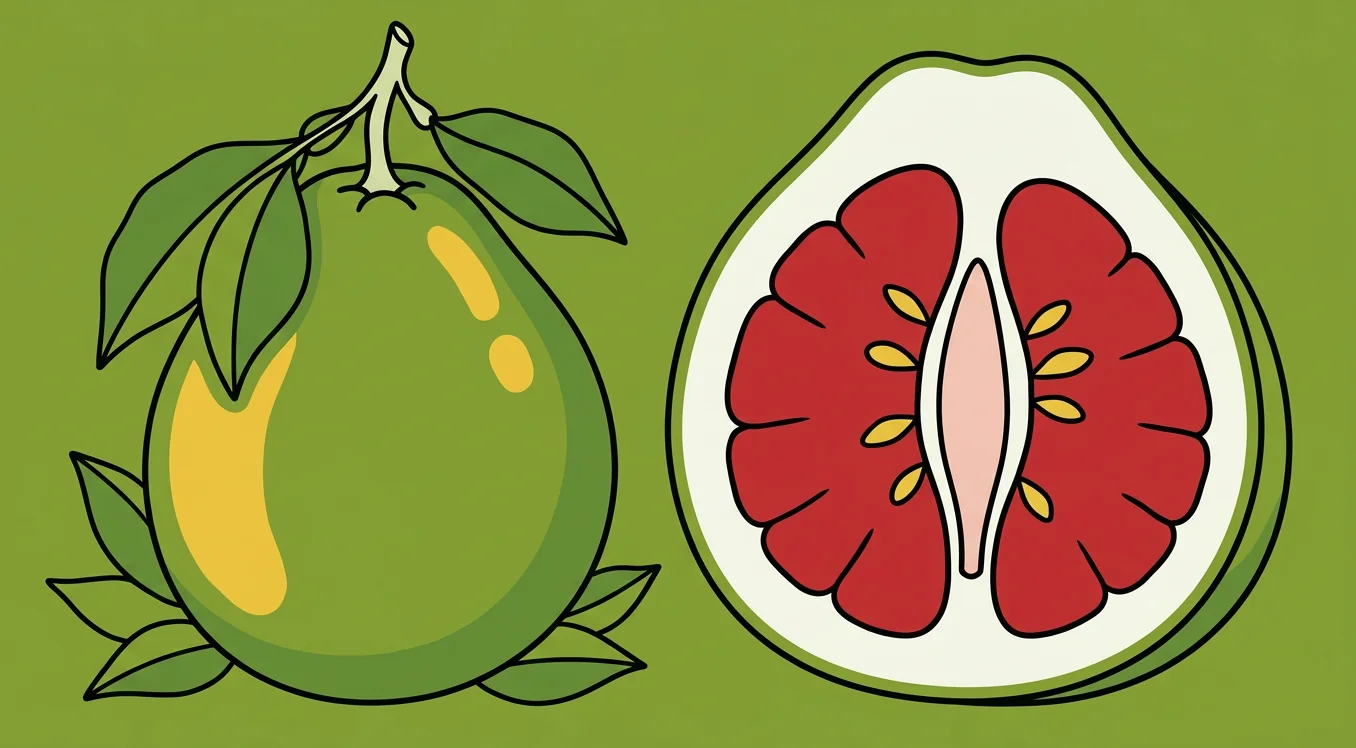
When most people picture a pomelo, they imagine pale white or yellow flesh. But some of the finest pomelo varieties in the world have flesh that ranges from soft blush pink to deep ruby red. These red and pink pomelos tend to be sweeter, more aromatic, and carry nutritional benefits that their white counterparts lack.
What Is a Red Pomelo?
“Red pomelo” isn’t a single variety but a category that encompasses several Citrus maxima cultivars whose flesh contains significant amounts of lycopene and other carotenoid pigments. These pigments produce colors ranging from pale pink to deep crimson, similar to the way they color pink grapefruit and watermelon.
The color develops as the fruit matures on the tree and is influenced by both genetics and growing conditions. Warmer climates and more sun exposure tend to produce deeper coloration. A pomelo that appears relatively pale when grown in cooler conditions might develop much richer color in a tropical growing environment.
For a broader overview of all pomelo types, including white varieties and hybrids, see our complete pomelo varieties guide.
Red and Pink Pomelo Varieties
Several distinct cultivars fall under the “red pomelo” umbrella:
Thai Red Pomelo (Thongdi)
The Thongdi (Thong Dee, meaning “good gold” in Thai) is a round pomelo with pinkish-red flesh that is widely considered one of the sweetest pomelo varieties in the world. Grown primarily in Thailand’s Nakhon Pathom province, the Thongdi has a thinner rind than many pomelos and produces very juicy, tender segments.
In Thai markets, premium Thongdi pomelos command high prices and are carefully graded by size, color, and sweetness. The variety is also grown in Vietnam, where it’s equally prized.
Valentine Pomelo
The Valentine is a modern hybrid, technically a pomelo-mandarin cross (pomelo x blood mandarin), developed in California. It has striking red flesh, is virtually seedless, and peels more easily than most pomelos. The Valentine is becoming increasingly popular at California farmers markets and represents the future of pomelo breeding in the United States.
Despite being a hybrid, the Valentine retains the size and general character of a pomelo, with sweeter, less bitter flesh than a grapefruit.
Chandler Pomelo
The Chandler has pink (not deep red) flesh and is the most widely grown pomelo variety in the United States. Developed at UC Riverside from Thai parent varieties, it offers an excellent balance of sweetness and acidity with attractive blush-pink segments.
Red Honey Pomelo
A Chinese variety primarily grown in Fujian province, the Red Honey Pomelo (Hong Rou Mi You) has deep pink-red flesh and the same mild sweetness associated with the standard Honey Pomelo. It has become increasingly available in Western markets, often sold wrapped in red netting.
Red vs White Pomelo
The differences between red and white pomelo varieties extend beyond color:
| Characteristic | Red/Pink Pomelo | White/Yellow Pomelo |
|---|---|---|
| Flavor | Sweeter, more complex, slightly more aromatic | Milder, cleaner citrus flavor |
| Sweetness | Generally higher | Moderate to sweet |
| Bitterness | Very low | Very low to low |
| Juiciness | Slightly more juicy on average | Varies by variety |
| Key nutrient difference | Contains lycopene | No lycopene |
| Availability | Less common, often seasonal | More widely available |
| Price | Often higher | Standard pricing |
Nutritional Differences
The most significant nutritional distinction is lycopene. Red and pink pomelo varieties contain meaningful amounts of this carotenoid antioxidant, which white-fleshed varieties lack entirely.
Lycopene has been extensively studied for its potential health benefits:
- Associated with reduced risk of prostate cancer in multiple epidemiological studies
- May support cardiovascular health by reducing LDL oxidation
- Has demonstrated anti-inflammatory properties in laboratory research
- May contribute to skin protection from UV damage
Both red and white pomelos are excellent sources of vitamin C, potassium, and dietary fiber. The overall macronutrient profile is similar regardless of flesh color. For detailed nutrition data, see our pomelo nutrition guide.
Taste and Texture
Red pomelos tend to be slightly sweeter than white varieties, with a more complex flavor that some describe as having berry-like or tropical undertones alongside the characteristic citrus notes. The flavor difference is subtle but noticeable when tasting red and white varieties side by side.
The texture of red pomelos is generally similar to white: firm, well-defined juice vesicles enclosed in thick membranes that should be removed before eating. Some red varieties, particularly the Thai Thongdi, are juicier than the typical white pomelo, with a slightly more tender segment structure.
Color intensity doesn’t always correlate with flavor intensity. A deeply colored red pomelo isn’t necessarily sweeter than a pale pink one. Sweetness depends more on ripeness, growing conditions, and the specific cultivar.
Where to Buy Red Pomelo
Red pomelos are less widely available than white varieties in Western markets, but finding them has become easier:
- Asian grocery stores are the most reliable source, particularly those specializing in Thai, Chinese, or Vietnamese products. Look for Thai Thongdi pomelos and Chinese Red Honey Pomelos.
- Farmers markets in California carry Chandler and Valentine pomelos during the November-February season
- Specialty produce retailers and online fruit delivery services occasionally stock red varieties during peak season
- Costco and Trader Joe’s sometimes carry red pomelo varieties seasonally
When shopping, look for fruit that feels heavy for its size with smooth, firm skin. A faint floral fragrance at the stem end indicates ripeness. For more selection tips, see our pomelo buying guide.
Best Uses for Red Pomelo
Red pomelos are excellent in preparations where their color can be showcased:
- Salads: The pink-red flesh creates a beautiful contrast in Thai pomelo salad and other dishes
- Fresh eating: Their typically sweeter flavor makes them ideal for eating straight from the segment
- Desserts: Stunning in mango pomelo sago, parfaits, and tarts where the color is visible
- Garnishes: Red pomelo segments make an elegant garnish for cocktails, plated desserts, and savory dishes
- Juicing: Produces a beautiful pink juice with a richer flavor than white pomelo juice
Last updated March 9, 2026