Pomelo vs Grapefruit: What's the Difference?
Compare pomelo and grapefruit side by side. Learn the key differences in size, taste, nutrition, genetics, and how each fruit is used in the kitchen.
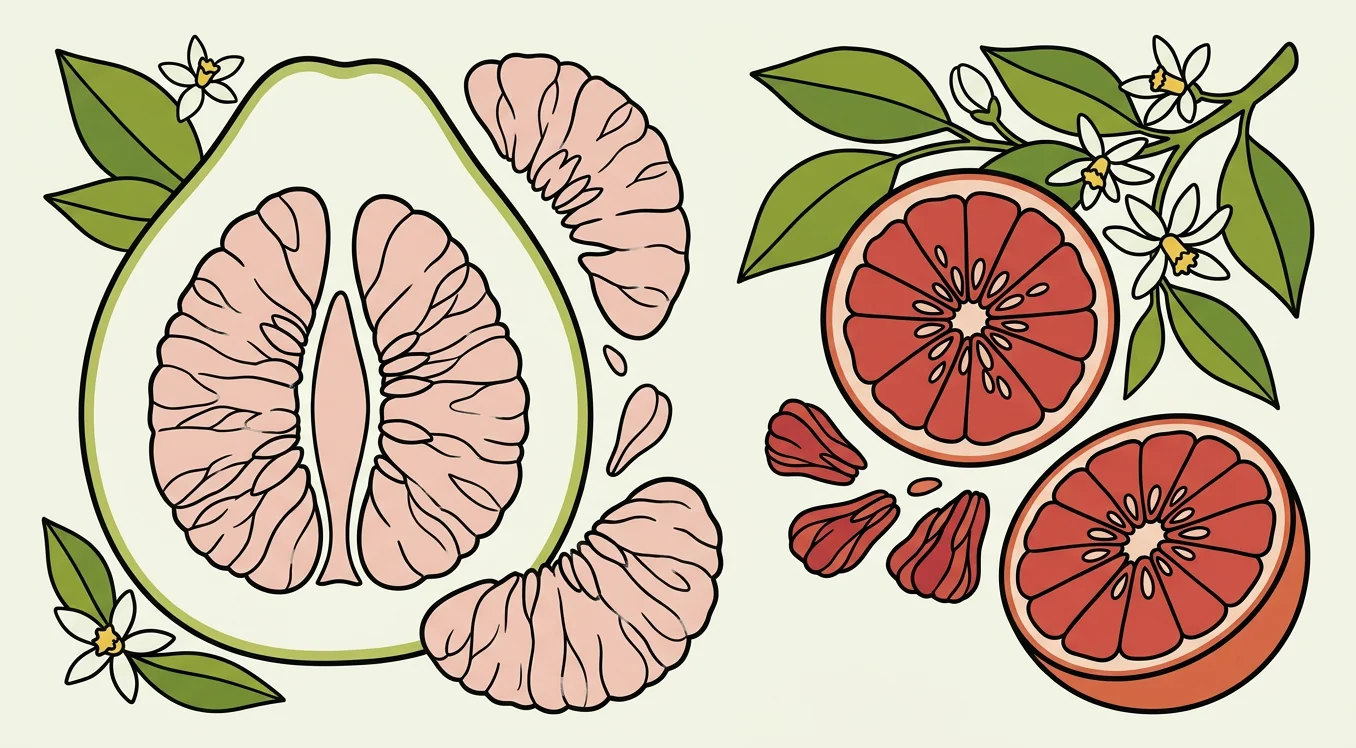
Walk into any produce aisle and you’ll find grapefruit without a second thought. But place a pomelo next to it and most shoppers pause. Is it the same thing? A bigger version? Something entirely different?
Pomelo and grapefruit are related, but they’re not the same fruit. The answer reveals one of the more interesting stories in fruit genetics, and the differences matter if you’re choosing between them for flavor, nutrition, or cooking.
Quick Comparison Table
| Feature | Pomelo | Grapefruit |
|---|---|---|
| Scientific name | Citrus maxima | Citrus x paradisi |
| Type | Original citrus species | Hybrid (pomelo x sweet orange) |
| Diameter | 6-10 inches | 4-6 inches |
| Weight | 2-4 lbs (up to 6+ lbs) | 0.5-1 lb |
| Rind thickness | Very thick (1+ inch pith) | Thin to moderate |
| Flesh color | White, pink, or red | White, pink, or red |
| Taste | Sweet, mild, slightly floral | Tart to bitter-sweet |
| Texture | Firm, drier segments | Juicy, tender |
| Calories (per 100g) | 38 kcal | 42 kcal |
| Vitamin C (per 100g) | 61 mg (68% DV) | 31 mg (34% DV) |
| Peak season | November - February | Year-round (peak Oct-June) |
| Average price | $3-6 each | $0.75-2 each |
| Availability | Asian markets, seasonal in supermarkets | Widely available |
Size and Appearance
The most obvious difference between pomelo and grapefruit is size. A pomelo typically measures 6 to 10 inches in diameter and weighs 2 to 4 pounds, making it the largest citrus fruit in the world. A grapefruit, by contrast, is 4 to 6 inches across and rarely exceeds one pound.
The rind is another reliable way to distinguish them. Pomelos have a notably thick layer of spongy white pith beneath the outer skin, often an inch or more deep. This pith is easy to peel away but does mean that the edible flesh accounts for a smaller proportion of the total fruit weight compared to grapefruit, which has a much thinner rind.
Shape also differs subtly. Pomelos tend toward a teardrop or slightly pear-shaped profile, with a tapered neck at the stem end. Grapefruits are more uniformly round. The outer skin color of both fruits ranges from green to yellow, though pomelos often retain a greener hue even when fully ripe.
Inside, both fruits have segmented flesh that can range from white to pink to deep red depending on the variety. However, pomelo segments are larger, more clearly defined, and separated by thicker membranes that are typically removed before eating.
Taste and Texture
This is where the choice between pomelo and grapefruit comes down to personal preference, and it’s where people are most surprised.
Pomelo tastes predominantly sweet, with a gentle citrus flavor and subtle floral notes. The bitterness that many people associate with grapefruit is largely absent. Even tart pomelo varieties are milder than a typical grapefruit. The sweetness comes through cleanly, making pomelo more approachable for people who find grapefruit too sharp.
Grapefruit has a more complex and assertive flavor profile. Depending on the variety, it ranges from quite tart and bitter (white grapefruit) to sweet-tart with a bitter finish (ruby red). This bitterness is caused by a compound called naringin, which is present in higher concentrations in grapefruit than in pomelo.
Texture is the other major distinction. Pomelo flesh is firmer and drier, with each juice vesicle (the tiny sac-like structures that hold the juice) feeling distinctly separate. The segments hold together well and don’t release much juice when handled. Grapefruit, on the other hand, is notably juicier with softer, more tender segments that break apart easily.
For anyone who has avoided grapefruit because of its bitterness, the pomelo is worth trying. The milder, sweeter profile wins over many converts.
Nutritional Comparison
Both fruits are excellent sources of nutrition, but their profiles differ in meaningful ways.
| Nutrient (per 100g) | Pomelo | Grapefruit (pink/red) |
|---|---|---|
| Calories | 38 kcal | 42 kcal |
| Total carbohydrates | 9.6 g | 10.7 g |
| Dietary fiber | 1.0 g | 1.1 g |
| Vitamin C | 61 mg (68% DV) | 31 mg (34% DV) |
| Potassium | 216 mg (6% DV) | 135 mg (4% DV) |
| Vitamin A | 0 IU | 1,150 IU (pink/red) |
| Lycopene | Minimal | Significant (pink/red) |
The standout difference is vitamin C. Pomelo delivers nearly double the vitamin C of grapefruit per 100 grams, making it one of the most concentrated natural sources of this nutrient. Pomelo also provides more potassium.
Grapefruit has its own nutritional advantage: pink and red varieties are rich in vitamin A and lycopene, a carotenoid antioxidant linked to heart health and cancer prevention. White grapefruit and pomelo contain very little of these compounds.
Calorie for calorie, both fruits are excellent choices. They’re low in calories, high in water content, and provide meaningful amounts of essential vitamins and minerals. For a more detailed analysis, see our pomelo nutrition guide.
The Genetic Relationship
Understanding the family tree of these two fruits explains why they look similar yet taste so different.
The pomelo is one of the three ancestral citrus species, the others being the mandarin (Citrus reticulata) and the citron (Citrus medica). These three species are the genetic foundation of virtually all cultivated citrus. They diverged from a common ancestor during the Miocene era, between 6 and 8 million years ago.
The grapefruit is a much younger fruit. It originated as a natural hybrid in Barbados sometime in the early 18th century, arising from a cross between the pomelo (which had been introduced to the Caribbean in the 17th century) and the sweet orange (itself a hybrid of pomelo and mandarin). The grapefruit was first documented in 1750, when it was called “the forbidden fruit”.
Genetically, the grapefruit carries approximately 63% pomelo DNA and 37% sweet orange DNA. This makes the grapefruit essentially a pomelo backcross, a hybrid that then crossed back with one of its parent lineages. That heavy pomelo contribution explains the strong family resemblance in size, segmentation, and flavor, while the sweet orange genes contribute the grapefruit’s juiciness and some of its distinctive tartness.
Every grapefruit you’ve ever eaten is, in a sense, part pomelo.
How They Are Used Differently
Despite their similarities, pomelo and grapefruit occupy different culinary niches around the world.
Pomelo in the kitchen:
- Fresh eating is the primary use across Southeast Asia. The segments are peeled and eaten as a snack or dessert.
- Thai pomelo salad (yam som-o) combines pomelo segments with shrimp, toasted coconut, peanuts, and a spicy lime dressing.
- Chinese and Vietnamese cuisines use pomelo in both sweet and savory preparations, including the popular dessert mango pomelo sago.
- The thick rind is candied in many Asian traditions, and in some cultures, it’s used in soups and stir-fries.
- Pomelo segments hold their shape well in salads and composed dishes due to their firm texture.
Grapefruit in the kitchen:
- Juicing is a primary use in Western countries. Fresh-squeezed grapefruit juice is a breakfast staple.
- Halved grapefruit with sugar or honey remains a classic breakfast preparation.
- Grapefruit segments (supremes) appear in salads and desserts in American and European cuisine.
- Grapefruit zest and juice are used extensively in cocktails, marinades, and baking.
- The juicier texture makes grapefruit better suited to applications where liquid is needed.
For recipes that showcase pomelo at its best, our recipe collection includes both traditional Asian preparations and modern fusion dishes.
Price and Availability
Availability is one of the practical factors separating these two fruits for most shoppers.
Grapefruit is widely available year-round at virtually every grocery store in North America. The primary growing regions are Florida, Texas, California, and Arizona, with imports supplementing supply during off-peak months. Prices typically range from $0.75 to $2.00 per fruit.
Pomelo has a more limited window. In the United States, pomelos are available primarily from November through February, coinciding with the harvest season in China and Southeast Asia. Asian grocery stores tend to carry them year-round (sourced from different growing regions), while mainstream supermarkets stock them only during peak season. Expect to pay $3 to $6 per fruit.
The price difference largely reflects logistics. Pomelos are heavier, bulkier, and more perishable during transport. The thick rind that protects the fruit also adds dead weight that buyers pay for. Still, the edible portion of a large pomelo can yield as much usable flesh as two or three grapefruits once you account for the rind.
Frequently Asked Questions
Is pomelo just a big grapefruit?
No. While they’re related, pomelo and grapefruit are genetically distinct fruits. The pomelo is an original citrus species, while the grapefruit is a hybrid that arose from a cross between pomelo and sweet orange in the 18th century. They differ in taste, texture, size, and nutritional profile.
Does pomelo interact with medications like grapefruit?
Yes. Pomelo contains furanocoumarins, the same compounds that cause grapefruit to interfere with certain medications, including some statins, calcium channel blockers, and immunosuppressants. If you’ve been advised to avoid grapefruit, you should also avoid pomelo unless your doctor says otherwise. Learn more in our guide to pomelo drug interactions.
Which is healthier, pomelo or grapefruit?
Both are highly nutritious and low in calories. Pomelo provides nearly twice as much vitamin C per serving, while pink and red grapefruit offer more vitamin A and lycopene. Neither is clearly “healthier” overall. The best choice depends on which nutrients you’re prioritizing.
Can you substitute pomelo for grapefruit in recipes?
In most cases, yes. Pomelo works as a substitute in salads, desserts, and fresh preparations. Keep in mind that pomelo is sweeter and less bitter, so you may want to reduce sugar or other sweeteners accordingly. The drier texture also means it releases less juice, so it’s not an ideal substitute in recipes that rely on grapefruit juice.
Last updated March 9, 2026