The Global Pomelo Industry: Production, Trade, and Market Trends
An in-depth look at global pomelo production, international trade routes, market trends, and the challenges shaping the citrus industry's largest fruit.
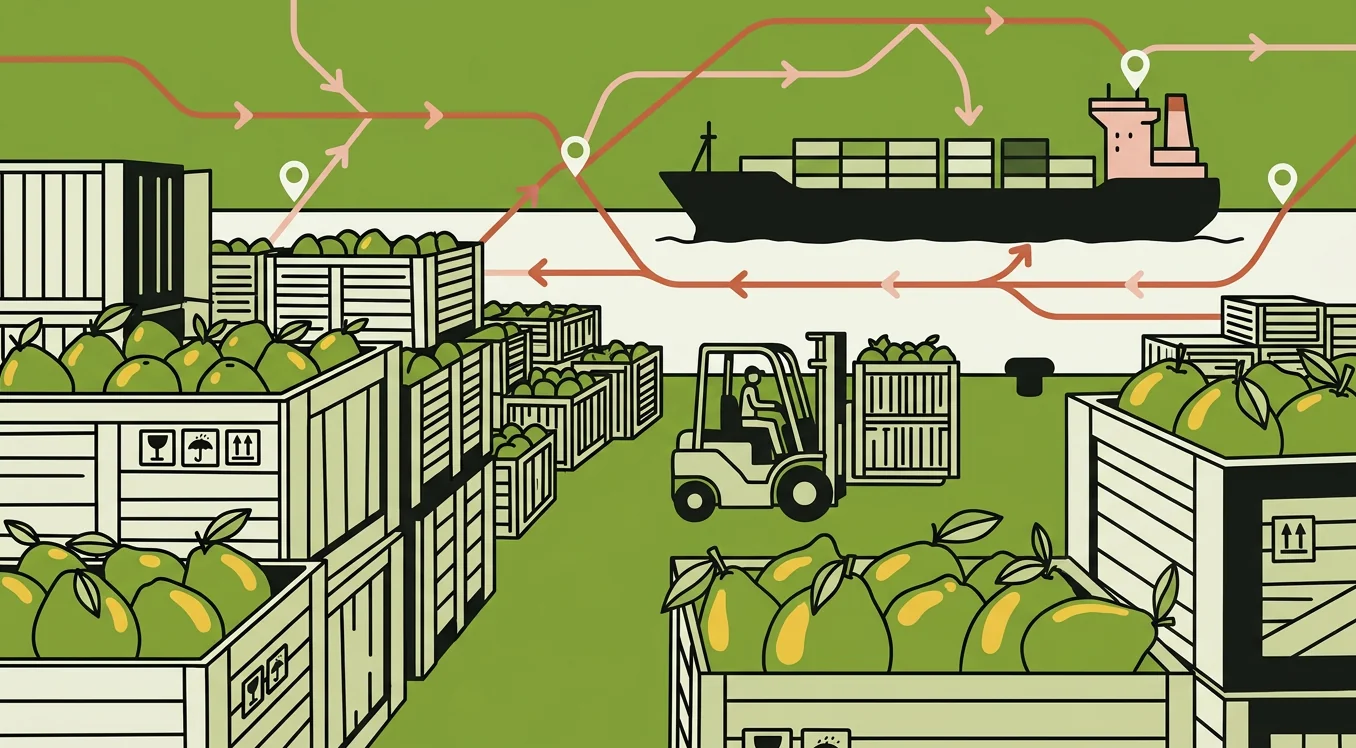

The pomelo (Citrus maxima) is the largest citrus fruit, one of the three ancestral citrus species, and a staple across much of Asia. Yet it’s virtually unknown to most Western consumers. That’s changing. Over the past decade, rising demand in North America and Europe, combined with expanding cultivation in Southeast Asia, has turned the pomelo into one of the citrus sector’s most interesting growth stories.
The industry is at an inflection point: production is scaling, trade infrastructure is maturing, and consumer awareness is finally catching up.
Global Production Overview
World pomelo production is estimated at 8 to 10 million metric tons annually, though precise figures are difficult to pin down because many countries report pomelo data under broader citrus or grapefruit categories. The FAO groups pomelo with grapefruit in its FAOSTAT database, which obscures the true scale of pomelo-specific output.
What’s clear is that production has grown steadily over the past two decades, driven by domestic demand in Asian markets and, more recently, export-oriented cultivation in China and Southeast Asia.
Top Producing Countries
| Country | Est. Annual Production | Key Varieties | Notes |
|---|---|---|---|
| China | 5-6 million MT | Guanxi Honey, Shatian, Wendan | Dominates global output; Fujian, Guangdong, Guangxi provinces lead |
| Thailand | 400,000-600,000 MT | Thongdi, Khao Tangkwa | Major domestic market; growing exports |
| Vietnam | 300,000-500,000 MT | Nam Roi, Da Xanh | Mekong Delta production hub |
| Indonesia | 200,000-400,000 MT | Bali, Nambangan | Primarily domestic consumption |
| India | 150,000-300,000 MT | Chakotra varieties | Northeast India, limited export infrastructure |
| Israel | 20,000-40,000 MT | Chandler, Israeli Sweetie | Export-focused; supplies European market |
China’s dominance is overwhelming. The country accounts for an estimated 60-70% of global pomelo production, with the provinces of Fujian, Guangdong, and Guangxi forming the core growing regions. The Guanxi Honey pomelo from Pinghe County, Fujian alone produces over 1 million metric tons per year, making a single county’s output larger than most countries’ total pomelo harvest.
Curious how pomelo compares to grapefruit? We break that down in our pomelo vs. grapefruit comparison.
Major Markets and Consumption Patterns
Asian Domestic Consumption
The vast majority of pomelos, roughly 85-90%, are consumed domestically in the countries where they’re grown. In China, Thailand, Vietnam, and other Southeast Asian nations, pomelo is a mainstream fruit you’ll find at wet markets, supermarkets, and street stalls. Cultural significance amplifies demand: pomelo is a traditional gift during the Mid-Autumn Festival and Lunar New Year in China and Vietnam, and it plays ceremonial roles in Thai and Malaysian culture.
Domestic consumption in China alone absorbs most of the country’s enormous output. Per-capita pomelo consumption in southern Chinese provinces is estimated at 5 to 10 kg per year, far higher than any Western market.
Growing Western Demand
Western markets represent a small but rapidly expanding segment. In the United States, pomelo imports have grown substantially over the past decade. USDA Foreign Agricultural Service data shows that specialty citrus imports (a category that includes pomelo) have increased by approximately 15-20% in value over the past five years.
Key drivers of Western demand include:
- Health-conscious consumers seeking lower-calorie, lower-sugar alternatives to grapefruit
- Asian diaspora communities in major metropolitan areas sustaining baseline demand
- Specialty grocery chains (Whole Foods, specialty Asian markets) expanding pomelo shelf space
- Social media exposure introducing the fruit to new demographics
Despite this growth, pomelo remains a niche product in Western retail. Most American consumers have never bought one, and many couldn’t identify the fruit on sight.
International Trade and Export Routes
Key Trade Routes
Global pomelo trade follows predictable patterns shaped by geography, trade agreements, and phytosanitary access:
- China to Hong Kong/Macau: The highest-volume trade corridor. Proximity and cultural demand make this route dominant.
- China to EU: Growing but constrained by EU phytosanitary requirements. Primarily Honey pomelo varieties.
- Thailand to Japan/South Korea: Premium market; Thai pomelos command high prices in Japanese retail.
- Israel to EU: Consistent supply of Sweetie pomelo (technically an oroblanco/pomelo hybrid) to European supermarkets.
- China/Vietnam to United States: Expanding, but subject to USDA APHIS phytosanitary protocols including cold treatment for fruit fly mitigation.
US Import Regulations
Pomelo imports to the United States must comply with USDA Animal and Plant Health Inspection Service (APHIS) regulations. Key requirements include:
- Phytosanitary certificate from the country of origin
- Cold treatment (typically 1.1°C / 34°F for 14-18 days in transit) for fruit from regions with fruit fly risk
- Inspection at port of entry for pests including Asian citrus psyllid and citrus canker
- Country-specific protocols. Not all countries have negotiated market access for pomelo to the US.
These requirements add cost and complexity, which partly explains why pomelo pricing at US retail (typically $3-6 per fruit) remains significantly higher than in Asian markets (often $0.50-1.50 per fruit).
Market Trends
Premium and Organic Segments
As with many specialty fruits, the pomelo market is developing distinct value tiers:
- Commodity tier: Standard pomelo sold in bulk at Asian markets; price-competitive, minimal branding
- Premium tier: Branded varieties (e.g., Pinghe Guanxi Honey pomelo with geographic indication), gift-boxed for holidays, sold at 2-5x commodity pricing
- Organic tier: Small but growing; organic pomelo commands a 30-50% premium in Western retail
The premium gift market in China is particularly notable. During Mid-Autumn Festival, branded pomelo gift boxes can sell for $20-50 per box (2-4 fruits), a dramatic markup over standard pricing.
Value-Added Products
Beyond fresh consumption, pomelo is increasingly appearing in processed forms:
- Pomelo juice and juice blends (still small-scale compared to orange or grapefruit juice)
- Dried pomelo peel for traditional medicine and culinary use
- Pomelo essential oil extracted from rind for fragrance and aromatherapy
- Candied pomelo peel as a confection, particularly in Southeast Asian markets
- Pomelo extract in skincare and cosmetics (vitamin C and antioxidant positioning)
Value-added products remain a minor share of total industry revenue, but they represent one of the highest-margin opportunities for pomelo producers and processors.
Challenges Facing the Industry
Citrus Greening (HLB)
Huanglongbing (HLB), commonly known as citrus greening disease, is the single greatest threat to the global citrus industry, and pomelo is not immune. The disease, spread by the Asian citrus psyllid (Diaphorina citri), causes fruit to remain green, misshapen, and bitter, eventually killing the tree.
HLB has devastated citrus production in Florida, Brazil, and parts of Southeast Asia. Pomelo appears somewhat more tolerant than some citrus species, but it’s still susceptible. Affected regions face:
- Yield reductions of 30-50% in infected orchards
- Increased production costs for psyllid management programs
- Quarantine restrictions limiting trade from HLB-affected areas
No cure exists for HLB. Current management relies on psyllid control, removal of infected trees, and use of disease-free nursery stock. For details on growing practices that help manage these risks, see our pomelo farming guide.
Climate Change
Pomelo cultivation is sensitive to temperature extremes, drought, and changing precipitation patterns. Climate change introduces several risks:
- Shifting growing zones as warming temperatures move suitable cultivation areas poleward
- Increased frequency of extreme weather events (typhoons, flooding) in key growing regions
- Water stress in areas facing reduced rainfall or aquifer depletion
- Altered pest and disease pressure as warmer conditions expand the range of pests like Asian citrus psyllid
Supply Chain and Logistics
Pomelo’s large size and thick rind offer some natural protection during transport, but the fruit still presents logistics challenges:
- Weight and volume: At 1-3 kg per fruit, pomelos have a low value-to-weight ratio compared to smaller citrus
- Cold chain requirements: Optimal storage at 7-10°C with 85-90% relative humidity; deviations cause rind pitting and decay
- Shelf life: 2-4 weeks under proper cold chain, which limits market reach compared to more durable fruits
- Inconsistent sizing and appearance across shipments can complicate retail merchandising
These logistics constraints help explain why pomelo remains largely a regional product, with most trade occurring within Asia rather than across continents.
Industry Outlook
The pomelo industry’s trajectory is positive, if uneven. Asian production and consumption will continue to dominate, but the most dynamic growth is happening at the margins: Western import markets, premium branding, and value-added products.
Several factors could accelerate the industry’s development:
- Improved varieties bred for better transportability, uniform sizing, and seedlessness
- Expanded market access as more countries negotiate phytosanitary protocols
- Consumer education in Western markets. Many potential buyers simply don’t know what a pomelo is or how to pick a good one.
For consumers looking to explore the fruit, our buying guides cover how to choose, store, and prepare pomelo at home.
The pomelo will likely never rival the orange or lemon in global trade volume. But for a fruit that was virtually unknown outside Asia two decades ago, its growing international presence marks a meaningful shift in the citrus landscape.
Frequently Asked Questions
How much pomelo does the world produce each year?
Global pomelo production is estimated at 8 to 10 million metric tons annually. China alone accounts for 60-70% of this output, with additional significant production in Thailand, Vietnam, Indonesia, and India.
Why are pomelos expensive in Western countries?
Several factors contribute to higher Western retail prices: phytosanitary compliance costs, cold treatment requirements, high shipping weight relative to value, limited supply chains, and low consumer awareness that keeps volumes small. In Asian markets where supply chains are established and demand is high, pomelos are considerably cheaper.
Is citrus greening disease a threat to pomelo production?
Yes. Huanglongbing (HLB) affects all citrus species including pomelo. While pomelo shows some tolerance compared to other citrus, the disease has caused significant yield losses in affected regions and remains the industry’s greatest biological threat.
Which countries export the most pomelo?
China is the largest exporter by volume, primarily to Hong Kong, Southeast Asian neighbors, and increasingly to Europe. Thailand is a significant exporter to Japan and South Korea. Israel supplies the European market with pomelo hybrids (Sweetie/oroblanco). Vietnam’s export sector is growing rapidly.
Is the pomelo market growing?
Yes. Both production and trade volumes have increased over the past decade. Western import markets are growing at an estimated 15-20% in value over five years, driven by health-conscious consumers, Asian diaspora demand, and expanding retail availability.
Last updated March 9, 2026