The Cultural Meaning of Pomelo: Symbolism Across Asia
Explore the deep cultural meaning and symbolism of the pomelo across Asian traditions, from Chinese prosperity rituals to Southeast Asian spiritual practices and the fruit's rich etymology.
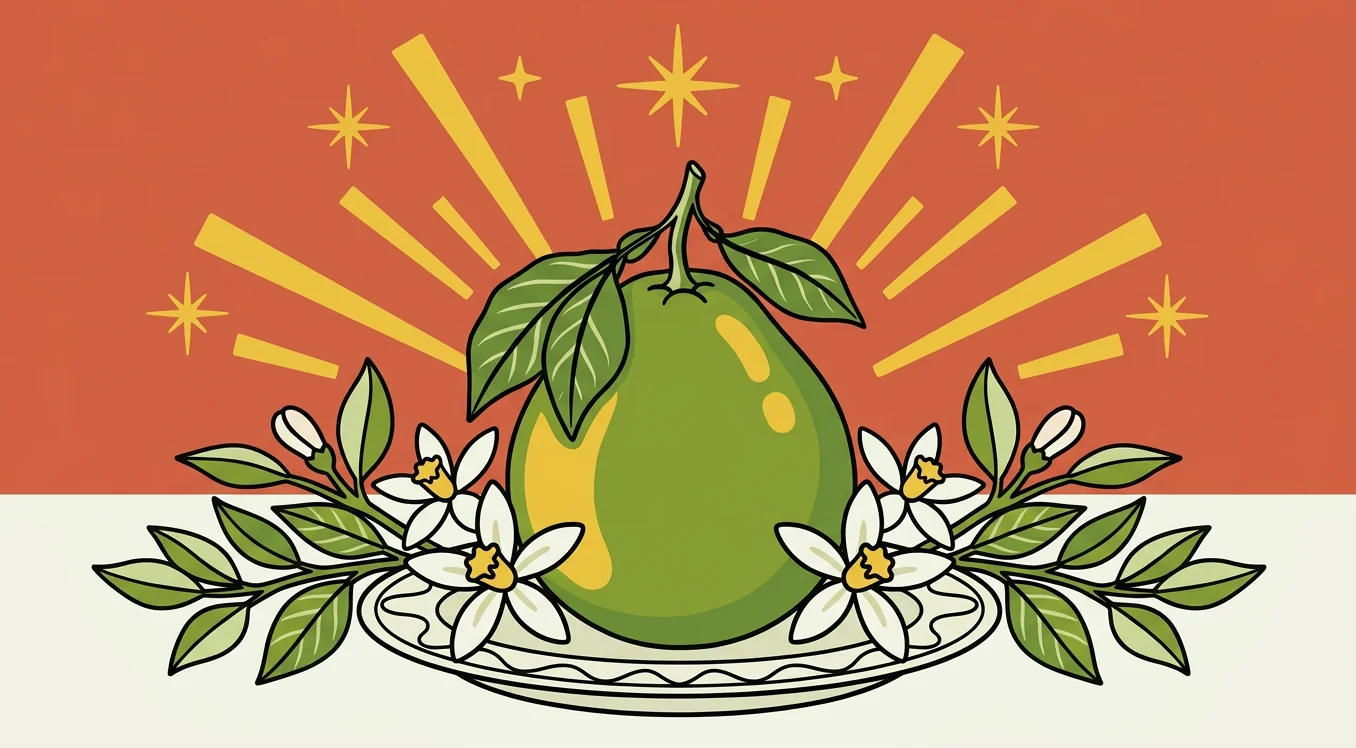
Few fruits carry as much cultural weight as the pomelo. Across Asia, this oversized citrus has accumulated layers of meaning over thousands of years, symbolizing prosperity, purity, family unity, and spiritual protection depending on the context and community. Understanding what the pomelo means in these traditions reveals something larger about how food functions as a cultural language.
Chinese Culture: Prosperity and Abundance
In Chinese culture, the pomelo’s symbolic meaning is rooted primarily in linguistic association. The Cantonese word for pomelo, yau (柚), is a near-homophone of yau (有), meaning “to have” or “to possess.” This phonetic link transforms the fruit into a vessel for wishes of wealth and abundance.
The symbolism runs deeper than wordplay. The pomelo’s physical attributes reinforce its auspicious associations:
- Size: The pomelo is the largest citrus fruit, suggesting generosity and fullness of life.
- Round shape: Roundness represents completeness, wholeness, and the cyclical nature of good fortune.
- Golden color: A ripe pomelo’s yellow-green to golden hue evokes the color of gold, linking the fruit to material wealth.
- Thick rind: The substantial protective peel symbolizes security, a barrier shielding the household from misfortune.
- Many seeds: In varieties with abundant seeds, the fruit suggests fertility and the continuation of family lineage.
These associations make pomelo central to Chinese New Year celebrations, where it appears on altars, in gift baskets, and at the reunion dinner table. The pomelo’s role in Chinese New Year is one of the most visible expressions of its cultural meaning, but the symbolism extends to weddings, business openings, and other occasions where prosperity is invoked.
In feng shui practice, displaying pomelos (or images of pomelos) in the home is believed to attract wealth energy, particularly when placed in the southeast corner of a room, which corresponds to the wealth sector in traditional feng shui mapping.
Etymology: Tracing the Name
The word “pomelo” itself carries traces of cultural exchange. Its etymology is debated among linguists, but the most widely accepted theory traces it to the Dutch pompelmoes, which in turn may derive from the Tamil pampa limāsu (“large citrus”) or from a combination of Portuguese and Malay roots.
Other names for the fruit reveal its geographic and cultural reach:
- Pummelo (alternate English spelling, used by the USDA)
- Shaddock (Caribbean English, after Captain Shaddock who reportedly brought the fruit to the West Indies in the 17th century)
- Yòuzi (柚子) in Mandarin Chinese
- Bưởi in Vietnamese
- Som-o (ส้มโอ) in Thai
- Jeruk bali in Indonesian (literally “Balinese citrus”)
- Jabong in Hawaiian
- Bontan or zabon in Japanese
Each name carries its own cultural register. The Indonesian term jeruk bali reflects the fruit’s association with Bali, even though pomelos grow across the archipelago. The Japanese bontan derives from a Chinese dialect term and entered Japan along with the fruit itself via maritime trade routes. The pomelo’s identity as Citrus maxima (literally “greatest citrus”) is itself a kind of naming that encodes cultural value.
Southeast Asian Traditions
Thailand
In Thai culture, the pomelo carries connotations of merit, generosity, and spiritual offering. Pomelos are among the most common fruits presented at Buddhist temples during tam bun (merit-making) rituals. The fruit’s large size makes it a generous offering, and its sweetness is symbolically aligned with the aspiration that good deeds will yield sweet outcomes.
Thai pomelo salad (yam som-o) is more than a dish. It’s a social food, prepared for gatherings and celebrations where sharing and community are emphasized. The act of breaking apart the pomelo’s segments and combining them with other ingredients mirrors the communal ethos the dish embodies.
Vietnam
In Vietnam, the pomelo holds similar prosperity symbolism. During Tet (Vietnamese Lunar New Year), pomelo is placed on the family altar as an offering to ancestors. A pomelo tree bearing fruit in the courtyard is considered an excellent omen for the household.
Vietnamese culture also associates the pomelo with beauty. Pomelo flower essential oil (tinh dầu hoa bưởi) is a traditional ingredient in hair care, believed to promote thick, lustrous hair. Pomelo peel is similarly used in folk beauty preparations, connecting the fruit to personal care rituals that carry cultural significance beyond the purely cosmetic.
Philippines and Malaysia
In the Philippines, pomelo (suha) from Davao is a point of regional pride and appears in harvest festivals. Malaysian Chinese communities maintain Chinese New Year pomelo traditions, while Malay culture incorporates pomelo into traditional medicine and post-partum care practices.
Indian Subcontinent: Ritual and Medicine
On the Indian subcontinent, the pomelo (chakotra in Hindi, bamblimas in some regional languages) occupies a distinct cultural niche. The fruit appears in Hindu temple offerings, particularly in South Indian traditions where citrus is associated with the goddess Lakshmi, deity of wealth and prosperity.
In Ayurvedic medicine, pomelo has been classified for centuries. Traditional practitioners describe it as having cooling properties that balance pitta (the fire element), making it a go-to during hot seasons. The pomelo’s nutritional profile lends some modern support to these traditional uses. The rind, juice, and even the leaves are incorporated into various Ayurvedic preparations for digestion, skin health, and respiratory conditions.
In Kerala and Tamil Nadu, pomelo is part of the Onam and Pongal harvest festival traditions, appearing in the elaborate banana-leaf feast layouts. Its inclusion signals abundance from the harvest. It’s a direct, agricultural expression of the same prosperity symbolism found in Chinese tradition, arrived at independently through a different cultural logic.
Spiritual and Religious Uses
Across multiple religious traditions, the pomelo serves a cleansing or protective function.
Buddhism: Pomelo is one of the most commonly offered fruits at Buddhist temples across East and Southeast Asia. Its size and sweetness make it an appropriate offering, and in some traditions, it is specifically associated with the paramita (perfection) of generosity.
Taoism: Pomelo leaves are used in Taoist purification rituals. Water infused with pomelo leaves is sprinkled around homes and businesses to dispel negative energy, particularly during the transition between the old and new lunar year.
Folk religion: In many Chinese and Southeast Asian folk traditions, pomelo peel burned as incense or added to bathwater is believed to ward off evil spirits and cleanse the bather of accumulated bad luck. This practice blurs the line between spiritual belief and practical aromatherapy. The essential oils released from pomelo rind genuinely produce a bright, uplifting fragrance.
Hinduism: Pomelo appears in offerings to Lakshmi and other deities. In some Bengali Hindu traditions, pomelo is offered during Durga Puja festivities.
Pomelo in Art and Literature
The pomelo’s visual impact (its imposing size, distinctive shape, and luminous color) has made it a recurring motif in Asian art.
In Chinese painting, pomelo appears in still-life compositions alongside other fruits, flowers, and auspicious objects. These paintings, common as New Year decorations, function as visual blessings: each element carries specific meaning, and the pomelo’s presence encodes wishes for prosperity.
In Vietnamese lacquerware and silk painting, pomelo blossoms and fruit appear as symbols of rural beauty and agricultural abundance. The pomelo blossom in particular is associated with spring, romance, and the Vietnamese countryside.
Literary references are similarly rich. Chinese poetry from the Tang and Song dynasties mentions the pomelo as a marker of southern landscapes and autumnal abundance. In Southeast Asian folk literature, pomelo trees appear in origin stories, love tales, and moral fables. There’s always an undertone of generosity, sustenance, or hidden value, much like the fruit itself, whose best qualities are concealed beneath a thick, unpromising exterior.
A Universal Thread
The most striking thing about pomelo symbolism is how consistent it is across very different traditions. Cantonese New Year celebration, Thai Buddhist temple, South Indian harvest festival, Vietnamese Tet altar: the pomelo means roughly the same thing everywhere. Abundance, generosity, protection, and hope.
That consistency probably comes down to the fruit itself. A pomelo is large, generous, sweet, and encased in a protective shell. These aren’t abstract qualities. They’re tangible, sensory experiences that naturally map onto human aspirations. The cultural meanings of pomelo are, in a sense, just readings of the fruit.
If you’re encountering pomelo for the first time, understanding its cultural weight adds a dimension that goes beyond flavor. When you peel open a pomelo, you’re participating in a tradition of meaning-making that spans centuries and continents. For more on the fruit itself, see our guide on what is a pomelo, and check out our buying guide for tips on picking the best one.
Last updated March 9, 2026